

Olive Trees in California: Beauty That Lasts
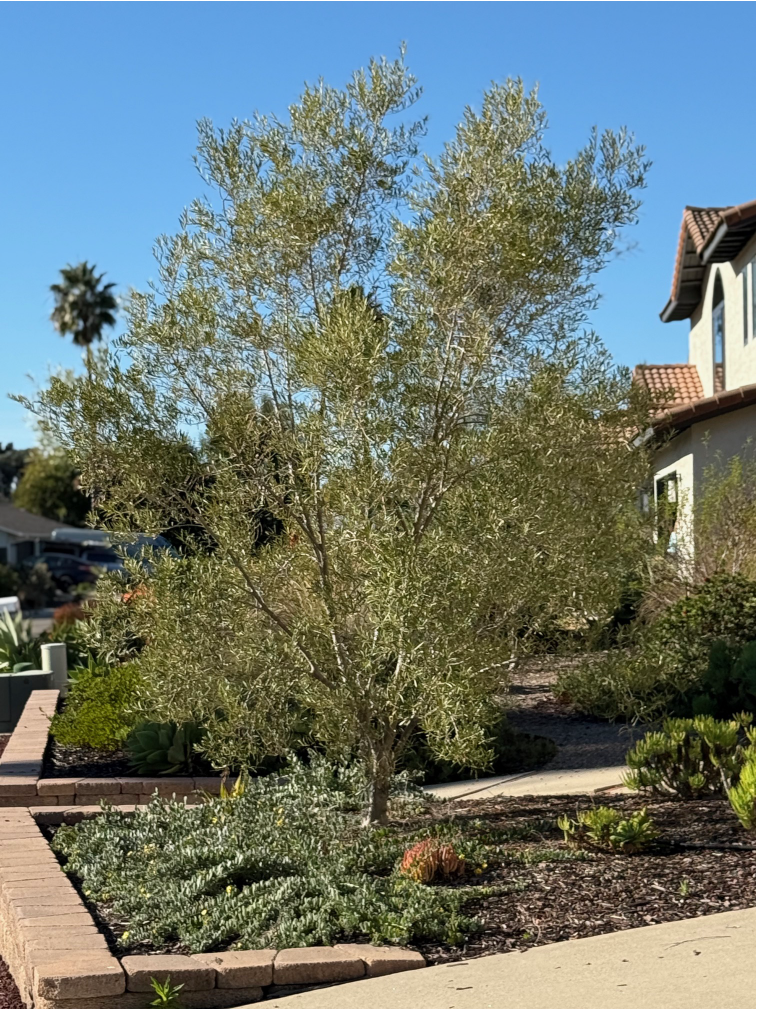
“The versatile olive tree that can be grown anywhere. This young tree decorates the entrance and is elegant filling the space with its green branches and leaves.” (Jodi Bay)
By Namir Damluji, UC Master Gardener of San Diego County
Some trees just feel right in California, and the olive tree (Olea europaea) is definitely one of them. With its silvery gray-green leaves, gnarled trunk, and quiet dignity, an olive tree looks like it’s always been here. It conjures up images of Mediterranean hillsides, yet fits perfectly into our own backyard; whether you’re along the coast or inland. Olives are beautiful, tough, and practical. Better yet, once settled in, they practically take care of themselves.
Why Olives Thrive Here
California’s climate is practically made for olives: long, dry summers and mild, wet winters. After the first couple of years, olives become remarkably drought tolerant. Their roots reach deep, their leaves hold moisture, and they do better without too much water. In a state where we’re always thinking about water, olives remind us that choosing the right plant matters as much as any drip system.
Choosing the Right Variety
If you want fruit, variety matters. Manzanillo and Sevillano are well-known table olives here. Arbequina, Frantoio, and Koroneiki are popular for oil and work nicely in smaller yards since they stay compact and fruit earlier. For purely ornamental planting, traditional Mission olives give you that classic silhouette though they can get quite large. For tighter spots, newer dwarf varieties work well.
Planting and Getting Established
Olives aren’t fussy, but appreciate proper planting. Keep the graft union above the soil line and don’t over-amend the planting hole. During the first year, water deeply but not constantly to encourage a strong root system. Once established, olives handle long dry spells, though summer water helps with flowering and fruit production.
Pruning with a Light Hand
Early on, pruning is about shaping, not controlling. Most California gardeners train olives to a single trunk with an open canopy. Remove crossing branches and thin dense center growth to keep the tree healthy. A little attention early on makes life easier later—mature trees usually just need occasional cleanup.
Pests and Practical Management
Like most fruit trees here, olives may have to deal with pests: scale insects, olive fruit fly, and mites. The good news? Integrated pest management works well. Monitor regularly, maintain good sanitation, and treat problems as they arise. UC Integrated Pest Management resources and local UC Master Gardener programs offer excellent guidance.
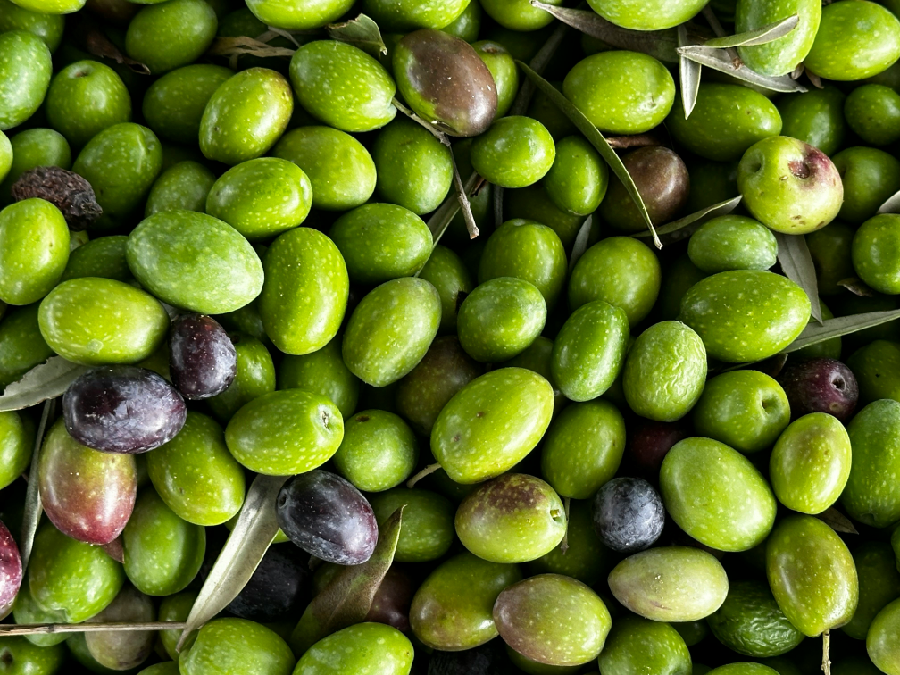
“Olives ready for milking into oil.” Photo credit – John Cameron via unsplash.com
Harvesting and Use
If you want to use the fruit, timing counts. Table olives need curing before eating; fresh olives are shockingly bitter. Olives for oil are harvested later, with flavor depending on ripeness. Some areas have small mills or cooperative presses for home production, though many gardeners simply enjoy the tree for its beauty.
Designing with Olives in Mind
Olives trees are long-lived and deserve careful placement. They need well-drained soil, so skip planting them in lawns or next to thirsty plants. Standard varieties can reach 25 to 30 feet. Give them space and time, and they’ll develop striking, sculptural forms that only improve with age.
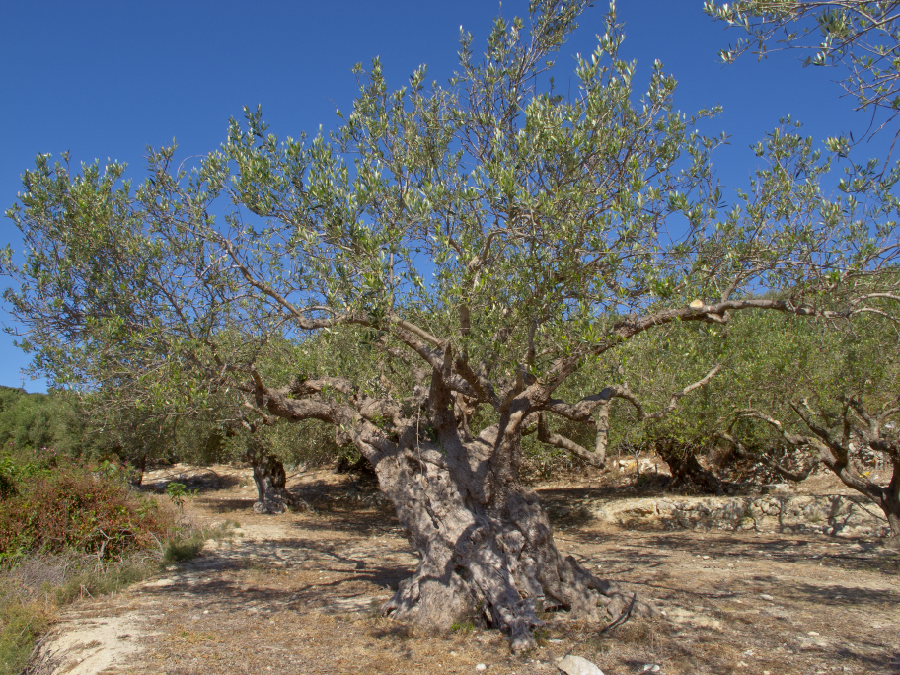
A very old olive tree from the Island of Crete, Greece.” Photo credit: Dr Amadeus Trnkoczy.
A Tree for the Long View
Adding an olive tree to your garden is more than just a landscaping choice; it’s planting something that will grow with your family for generations. It connects you to thousands of years of cultivation, feeds both pollinators and your family, and perfectly captures what California gardening is all about: embracing our climate rather than fighting it. Olives ask for very little but give back for decades, slowly becoming the heart of your yard; a tree that feels as permanent as the landscape itself.
Sources and further reading:
- University of California Agriculture and Natural Resources – Olive Production Manual
https://anrcatalog.ucanr.edu/Details.aspx?itemNo=3353
- UC Integrated Pest Management – Olive Pest and Disease Management
https://ipm.ucanr.edu/agriculture/olive/
- California Olive Oil Council – Olive Varieties Grown in California
https://www.cooc.com/about-olive-oil/olive-varieties/
- Sunset Western Garden Book – Olive Tree Care and Climate Suitability
https://www.sunset.com/garden/trees-shrubs/olive-tree-care
The author is a UC Master Gardener in San Diego, who has an interest in Bonsai cultivation and care, and especially taking trees that grow in the wild and training them to grow as bonsai. He also is interested in growing fruit trees and helping others with their orchards.