

Shaw’s Agave: A Rare Botanical Gem in San Diego
By Leah Taylor, UC Master Gardener of San Diego County
(This article originally appeared in the Jan / Feb 2026 edition of Cal Gardens magazine.)
San Diego’s diverse coastal ecosystem is home to an extraordinary array of plant species, but few are as rare and captivating as Shaw’s Agave (Agave shawii). This striking succulent, with its thick, spiny leaves and vibrant yellow flowers, is a vital part of the region’s natural heritage. Unfortunately, Shaw’s Agave is now considered endangered.
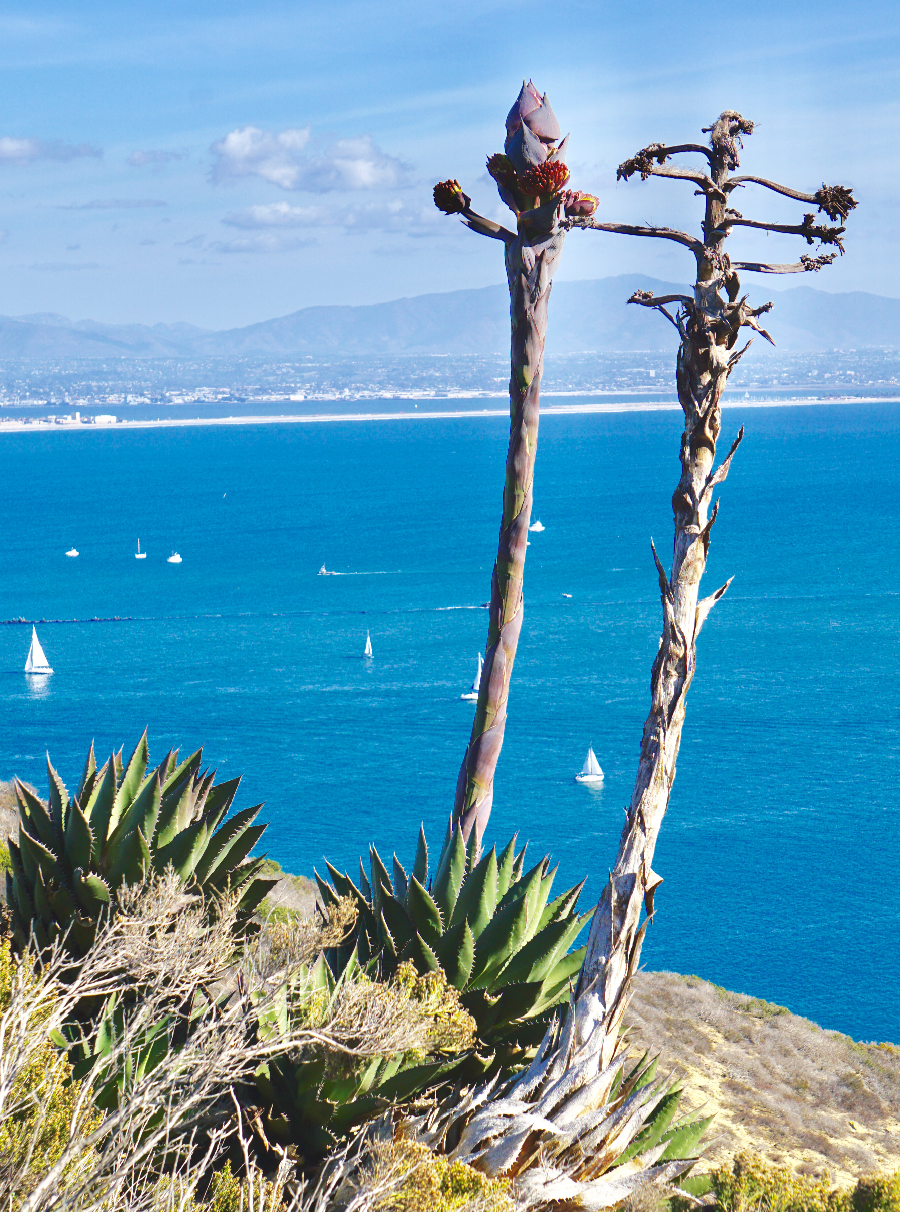
A pair of Shaw’s Agave in bloom at Cabrillo National Monument. Photo credit – Jodi Bay
Shaw’s Agave is native to the coastal regions of Southern California and Baja California, where it thrives in well-drained, sandy soils. Its distinctive rosette formation and colorful serrated leaf edges make it a standout species in San Diego’s chaparral and coastal sage scrub. Unlike some other agave species that grow in arid desert environments, Shaw’s Agave prefers the cooler, misty conditions provided by its proximity to the Pacific Ocean and in only narrow coastal margins.
Like all agaves, it is monocarpic, meaning it flowers once in its lifetime, usually after 20 to 30 years, before dying. Shaw’s Agave produces a flower stalk that can reach up to 15 feet high, topped with clusters of yellow flowers that attract pollinators such as bees, bats, butterflies, and even hummingbirds. This spectacular display plays a crucial role in each individual plant’s reproductive cycle.
Despite its resilience, Shaw’s Agave faces significant threats. Urban development along the coast has led to habitat fragmentation, leaving only a few isolated populations in protected areas like Torrey Pines State Natural Reserve and Cabrillo National Monument. Invasive species, soil erosion, and climate-related challenges such as prolonged droughts have further diminished its numbers.
Additionally, the plant’s slow reproductive rate makes recovery difficult. While mature plants produce offshoots known as “pups” that help sustain local populations, this process is not fast enough to counteract the impact of habitat loss. Conservationists have noted a sharp decline in wild populations over the past several decades, making preservation efforts more urgent than ever.
A 2021 study conducted by researchers from UC San Diego and related institutes analyzed DNA from five geographically distinct populations, including Point Loma Naval Base and Cabrillo National Monument. Surprisingly, the populations showed non‑clonal genetic diversity, indicating that agaves at Cabrillo are not genetically identical clones and retain variation - a promising sign for conservation genetics.
Moreover, the study explored soil microbiomes around these agaves. At Cabrillo National Monument, soil microbes utilized more carbon sources and displayed diversity patterns influenced by soil chemistry, such as higher pH and moisture. These findings suggest that both genetic and microbial diversity could support resilience—if the right conditions are maintained.
Also at Cabrillo, National Park Service biologists have also witnessed a haunting trend: despite being visited by many insect and bird species, Shaw’s Agave is not producing viable seedlings. The presumed traditional pollinator, the Mexican long‑tongued bat, has not been observed. Hand-pollination experiments have also failed to yield seeds.
Still, greenhouse propagation shows promise - over 200 juvenile plants have been successfully grown from viable seeds in controlled settings. Researchers are also experimenting with caging seedlings to mitigate herbivory (animals consuming plant material) hoping to improve survival rates in the wild.
Thankfully, various organizations and botanists are working tirelessly to protect Shaw’s Agave. The California Native Plant Society (CNPS) and local conservation groups have been monitoring existing populations and advocating for habitat restoration projects. Efforts include removing invasive plant species, stabilizing soil erosion, and reintroducing cultivated specimens into the wild.
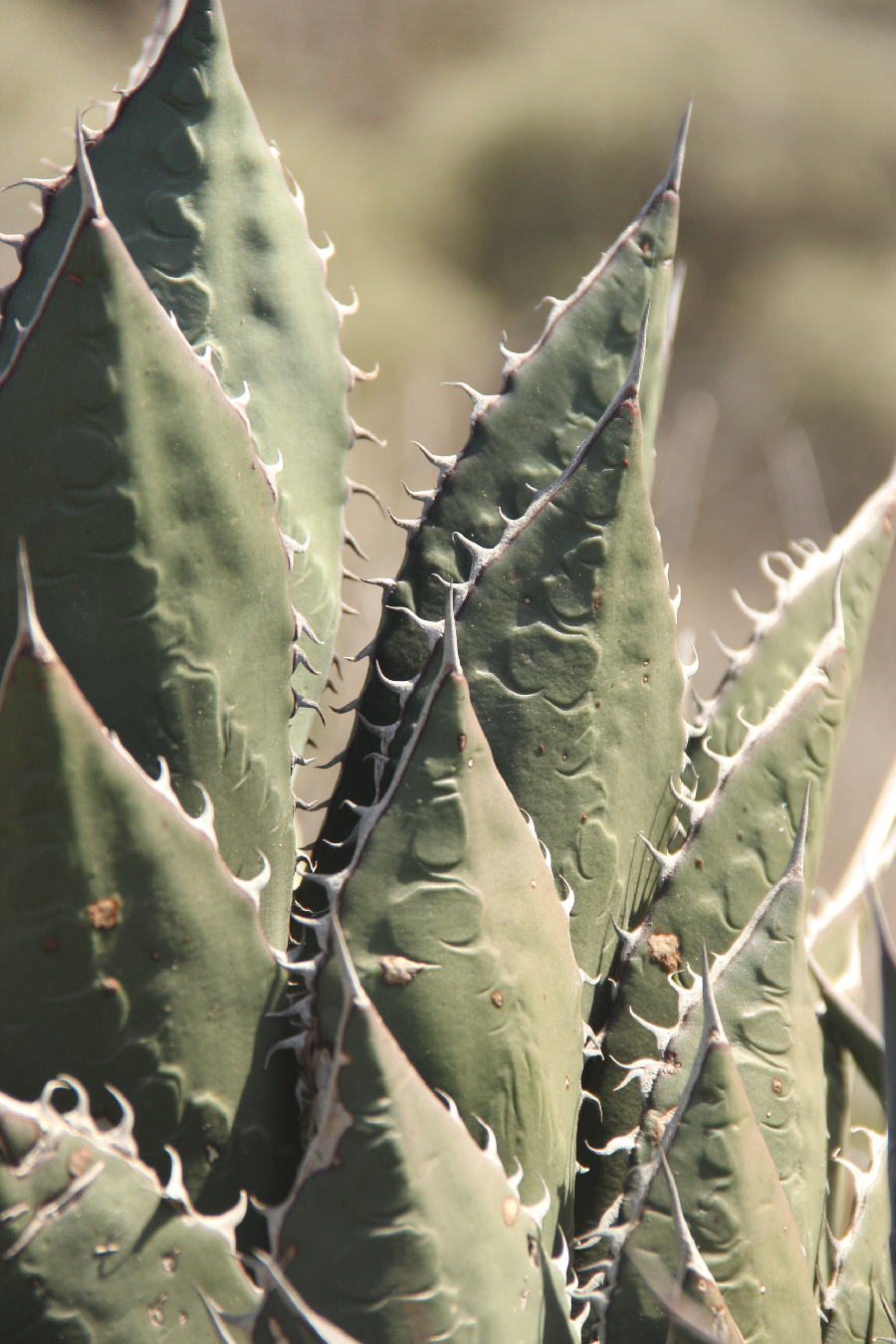
Shaw’s Agave can be recognized by the spines at the edge of their leaves. Photo credit – Jodi Bay
The San Diego Botanic Garden, San Elijo Lagoon Nature Center, and the Living Coast Discovery Center, have also taken an active role in cultivating Shaw’s Agave, ensuring that genetic diversity is preserved. Public awareness campaigns aim to educate residents and visitors about the plant’s ecological significance and encourage responsible landscaping practices that support native flora.
There are several ways San Diegans and plant enthusiasts can contribute to the survival of Shaw’s Agave. These include supporting conservation groups through donations or volunteer work, planting native species in our yards, and avoiding the removal of wild agave plants.
Additionally, visitors to natural reserves where Shaw’s Agave grows should remain on designated trails to prevent soil erosion and disturbance to fragile habitats. Raising awareness with friends and family about this endangered species can further aid conservation initiatives.
Shaw’s Agave is not just a remarkable plant—it is a symbol of San Diego’s unique coastal environment and a reminder of the delicate balance within nature. By taking steps to protect this rare species, we can ensure that future generations continue to witness the beauty and ecological importance of Shaw’s Agave in its native habitat.
Leah Taylor is the UC Master Gardener Program Coordinator and previous staff research associate with the University of California.