

Chiles’ spicy heritage is a lesson in how to flourish
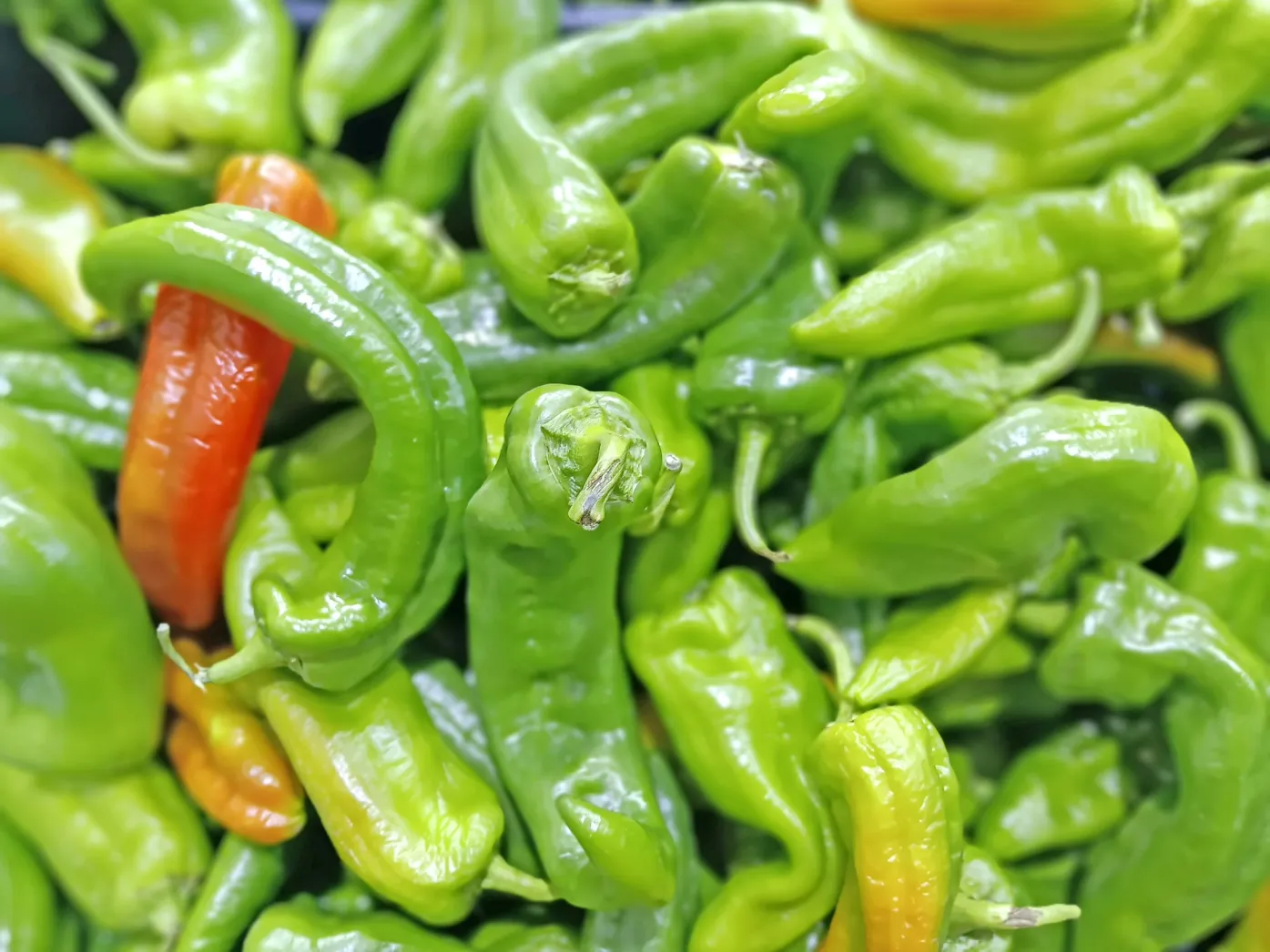
Although about 4,000 varieties of chiles exist worldwide, in the U.S. we mostly stick to the C. annuum family, which includes the shishito pepper. (Julio Estrada)
By Julio Estrada
(This article originally appeared in the June 13 edition of the San Diego Union-Tribune)
Some folks call it a short circuit; I prefer to think of it as “associative thinking,” a gloriously nonlinear way of processing the universe where a single spark sets off a chain reaction of memories, cold hard science, and ancient history.
Take a recent afternoon in Chula Vista. I was cruising west when I caught the sleek curves of my favorite German vehicle in the rearview. As it hummed past, the silver tailgate emblem caught the Southern California sun: Porsche Cayenne.
In a heartbeat, the asphalt dissolved. I wasn’t in a car anymore; I was back in an apartment years ago, staring at “Poncho,” the dear Mexican parakeet (Aratinga holochlora) my wife and I cared for when we were first dating. Why did a luxury SUV trigger thoughts of a bird? Because we used to feed Poncho the hottest chile peppers we could get our hands on.
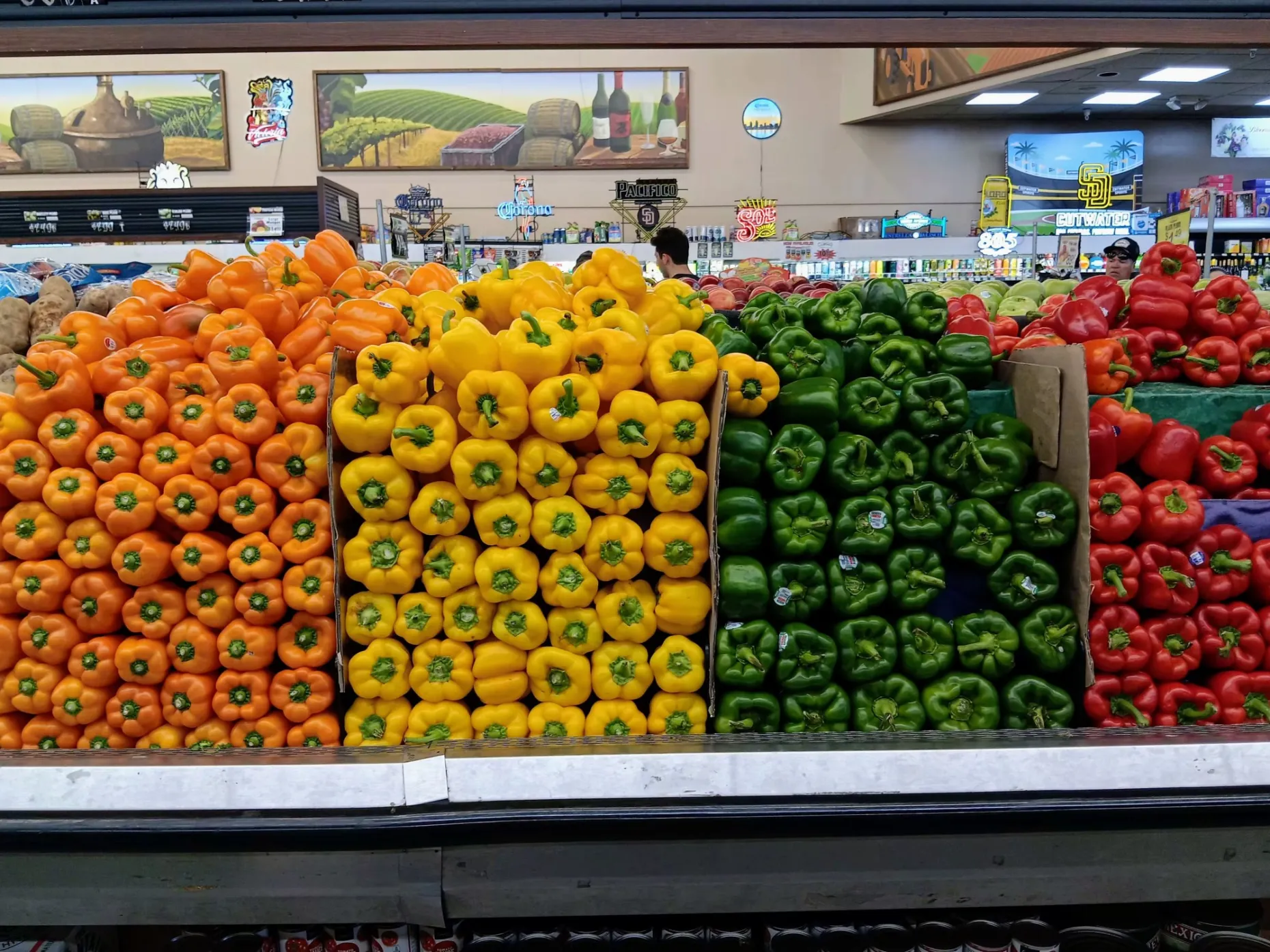
Bell peppers. (Julio Estrada)
Poncho lived for those fiery treats. According to Mexican lore, if you want a parakeet to develop an impressive vocabulary — especially the kind of foul-mouthed slang that would make a sailor blush — you feed them “spicy” chiles. While his linguistic progress remained up for debate, the biology behind it is sheer poetry.
You see, “spicy” isn’t actually a flavor. It’s a physical sensation of pain. When we bite into a habanero, the capsaicin hijacks our TRPV1 receptors located in our nociceptive nerves. These are the same sensors that scream “Danger!” when you touch a hot stove. But birds lack these specific receptors, allowing them to feast on peppers that would drop a grown man to his knees.
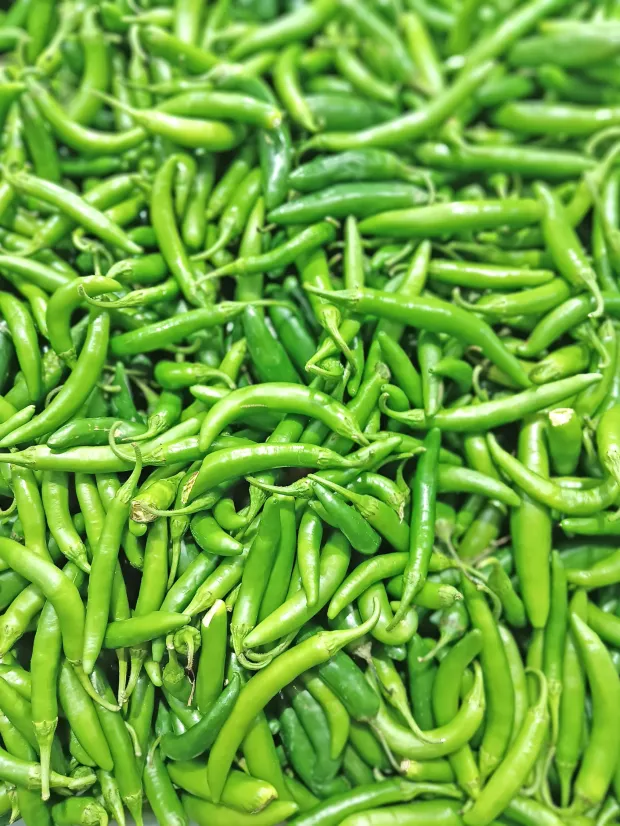
Serrano peppers. (Julio Estrada)
This is nature’s most brilliant long-con: ornithochory. Birds eat the peppers, fly miles away, and disperse the seeds through their digestive tracts. A study from Murdoch University in Australia found that ornithochory, the process of seeds passing through a bird’s gut, significantly increases seed viability. The bird gets a snack; the pepper gets a first-class ticket to a new neighborhood.
Even more impressive is the pepper’s role as an empirical pharmacist. Research by the University of Washington in Bolivia on the Capsicum chacoense revealed that when insects puncture a pepper and infect it with a seed-killing fungus, the plant fights back by cranking up its capsaicin levels. The “heat” (the increase in capsaicin levels) actually reduces the fungal load by more than 30%. Nature, it seems, prefers its medicine with a kick.
While archaeological evidence points to the Amazon basin — regions now straddling Bolivia and Brazil — as the birthplace of the chile, these fiery gems found their culinary soul in Mesoamerica. Roughly 7,000 years ago, central Mexico became the epicenter of domestication, transforming chiles into the staples we can’t live without.
But this history wasn’t something I first read in a textbook; I tasted it.
At age 7, my daily mission was a trek through the housing projects of Mexicali to the local tortillería. I’d return clutching the warm, fragrant paper package like a trophy. My grandmother, “Mama Licha,” would greet me with a slice of queso fresco, a perfectly ripe avocado, and a freshly roasted pasilla chile. She’d roll them into a tortilla with the finesse of a master artist, creating what I still believe to be the greatest taco in the history of the world.
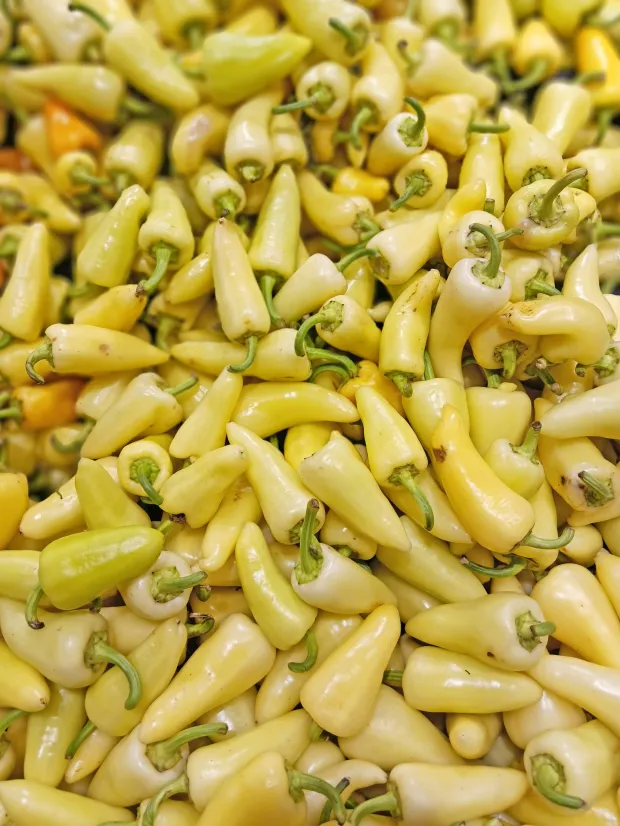
Yellow wax peppers. (Julio Estrada)
Mama Licha’s green thumb was the stuff of legend. Our third-floor balcony was a miniature jungle held together by sheer will and recycled coffee cans. In the winter, she’d line the kitchen with these cans, nursing seeds through the cold so they could move into broken galvanized buckets once the sun returned. She had no formal education in botany but she understood the earth’s alchemy, so she turned every food scrap into rich compost.
If you’re inspired to follow her lead and start your own “salsa garden,” remember her unspoken rule: Feed the soil. If you aren’t composting, at least use a fertilizer with less nitrogen and more phosphorus and potassium to encourage fruit rather than leaves. Don’t worry about pollinators; chile flowers are self-fertile, boasting both male and female parts. A good, gentle shake of the plant is often enough — think of it as giving your peppers a little morning workout.
However, be warned: these delicate plants have shallow roots and brittle branches that can snap under the weight of a heavy harvest. Give them a stake to lean on. You can trim branches for stability but you’ll want every pepper you can get.
Today, there are approximately 4,000 varieties of chiles worldwide. The Chile Pepper Institute at New Mexico State University notes that while we have 26 known wild species in the U.S., we mostly rely on five domesticated ones: annuum, chinense, frutescens, baccatum and pubescens. The C. annuum family is the overachiever, giving us everything from the humble bell pepper to the punchy jalapeño.
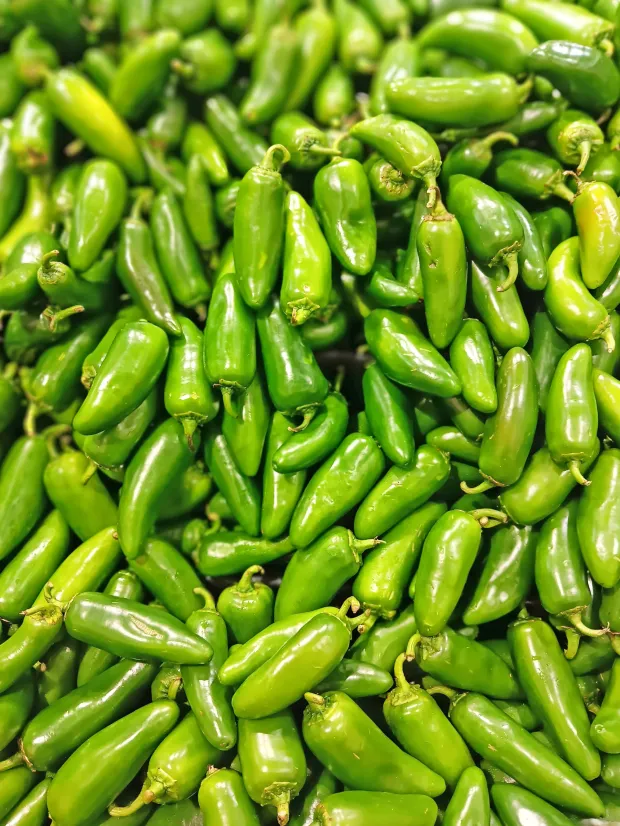
Jalapeño peppers. (Julio Estrada)
That afternoon in Chula Vista as I pulled off the road, the memories lingered. It’s funny how a German SUV can lead a person through Australian bird studies, Bolivian fungal research and back to a Mexicali third-floor balcony. But that is the beauty of the chile pepper — it is a plant that demands your attention, whether through its heat or its heritage.
Next time you sit down with a bowl of salsa, remember that the highest concentration of heat isn’t in the seeds, but in the white membrane that holds them. And remember Mama Licha, who knew instinctively that life, like a good taco, is all about the right association of ingredients.
Estrada is a physician from Mexico who served the county of San Diego as the Chief Medical Examiner Investigator for more than 20 years. Right after retirement, he became a UC Master Gardener and now devotes his time to the care of his elderly father and as a volunteer for the UC Master Gardeners of San Diego County.