

Passion in Your Garden: Growing Passion Fruit in California
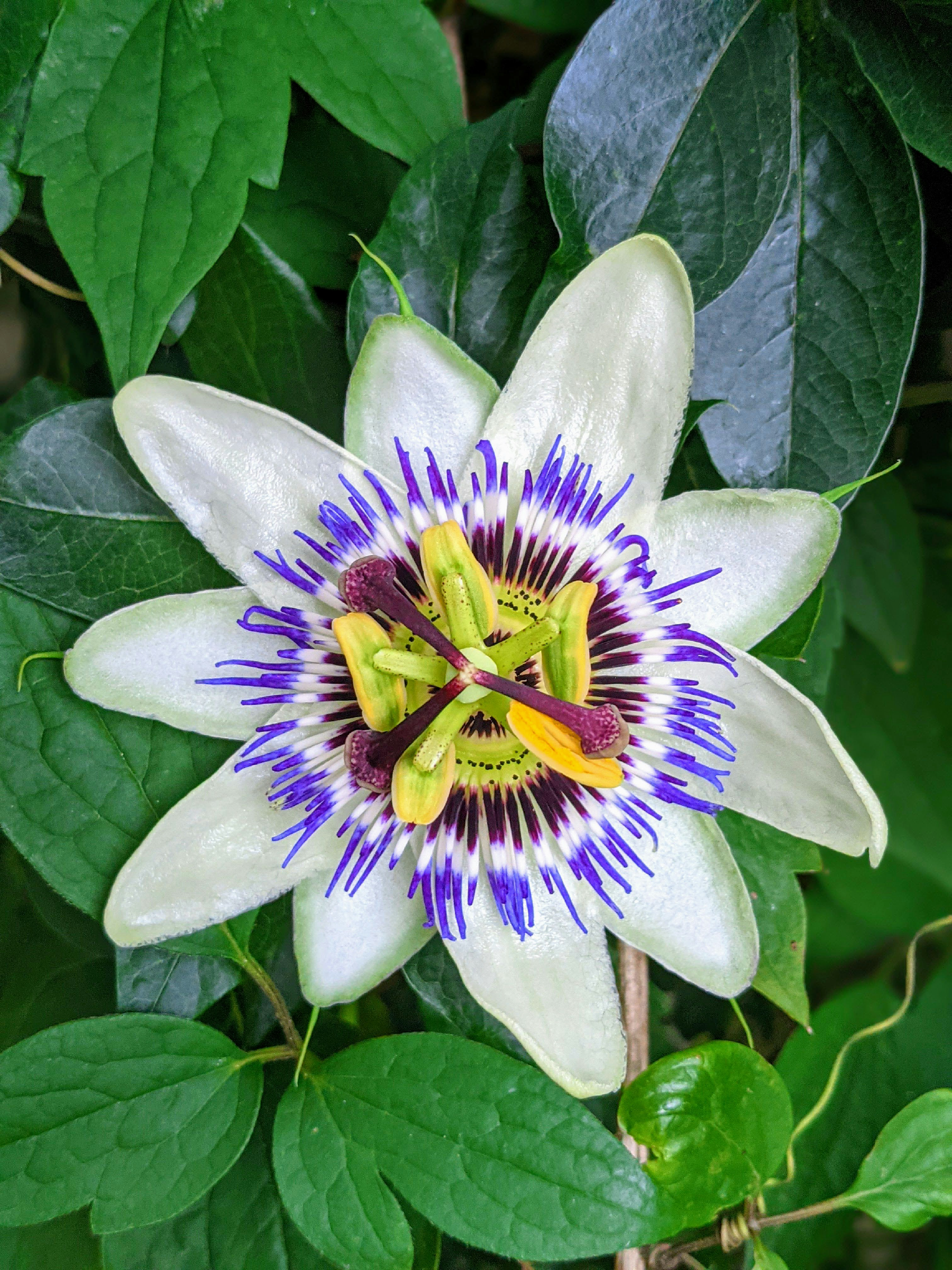
A close-up of a passion fruit blossom, known for its vivid symmetry. Photo credit – Stephane Juban via unsplash.com
By Namir Damluji
(this article first appeared in the July/August editiion of California Garden)
If you have ever cut open a ripe passion fruit, you know the appeal right away. The fruit has a bright tropical fragrance and a flavor that hints of citrus, guava, and a gentle floral sweetness. For California gardeners, passion fruit can be a rewarding vine to grow when it is planted in the right place.
Why It Works in California
Passion fruit grows best where winters are mild and the growing season is long. In California, that makes many coastal gardens and other sheltered locations especially suitable. Even so, it is not a plant for every yard, since it is sensitive to frost and can struggle in very hot, dry conditions.
Choosing a Variety
For home gardens, the two most common types are purple passion fruit and yellow passion fruit. Purple passion fruit is often the better choice for cooler coastal gardens because it is somewhat more tolerant of mild winter weather. Its fruit is usually smaller than yellow types, with aromatic pulp and a tangy flavor. Yellow passion fruit is generally larger and better suited to warmer climates, but it is more sensitive to frost. ‘Frederick’ is a vigorous hybrid valued for heavy fruiting and handling the cold well.
Planting and Site
The best time to plant passion fruit is usually from late winter into spring, after the risk of frost has passed. Choose a site with full sun, but in hotter inland gardens, afternoon shade can help reduce heat stress. A sturdy trellis, or wall support is essential, since passion fruit is a vigorous vine that needs space to climb and good air movement.
Soil and Water
Soil should drain well and contain plenty of organic matter. A slightly acidic to neutral pH, about 6.5 to 7.5, is generally suitable. Compost can improve soil structure and fertility. Good drainage is especially important, because passion fruit does not tolerate wet roots.
Regular watering is important, especially during flowering and fruit development, but the soil should not remain soggy. Mulch helps conserve moisture and moderate soil temperature, but keep it a few inches away from the base of the vine so the stem stays dry. Passion fruit is a strong grower and benefits from regular feeding, but avoid too much nitrogen, which can lead to lush leaf growth with fewer flowers and less fruit.
Pruning and Pollination
Pruning is important for keeping the vine healthy and manageable. Late winter or early spring is a good time to remove dead, weak, or tangled growth and to keep the plant within bounds. Pruning improves light and air circulation, both of which help the plant flower well and stay healthier over time.
Pollination is one of the keys to a good crop. Purple passion fruit can set fruit on its own. Yellow passion fruit needs pollen from another plant to set fruit. Bees are valuable pollinators, so a garden that supports pollinators can improve yields.
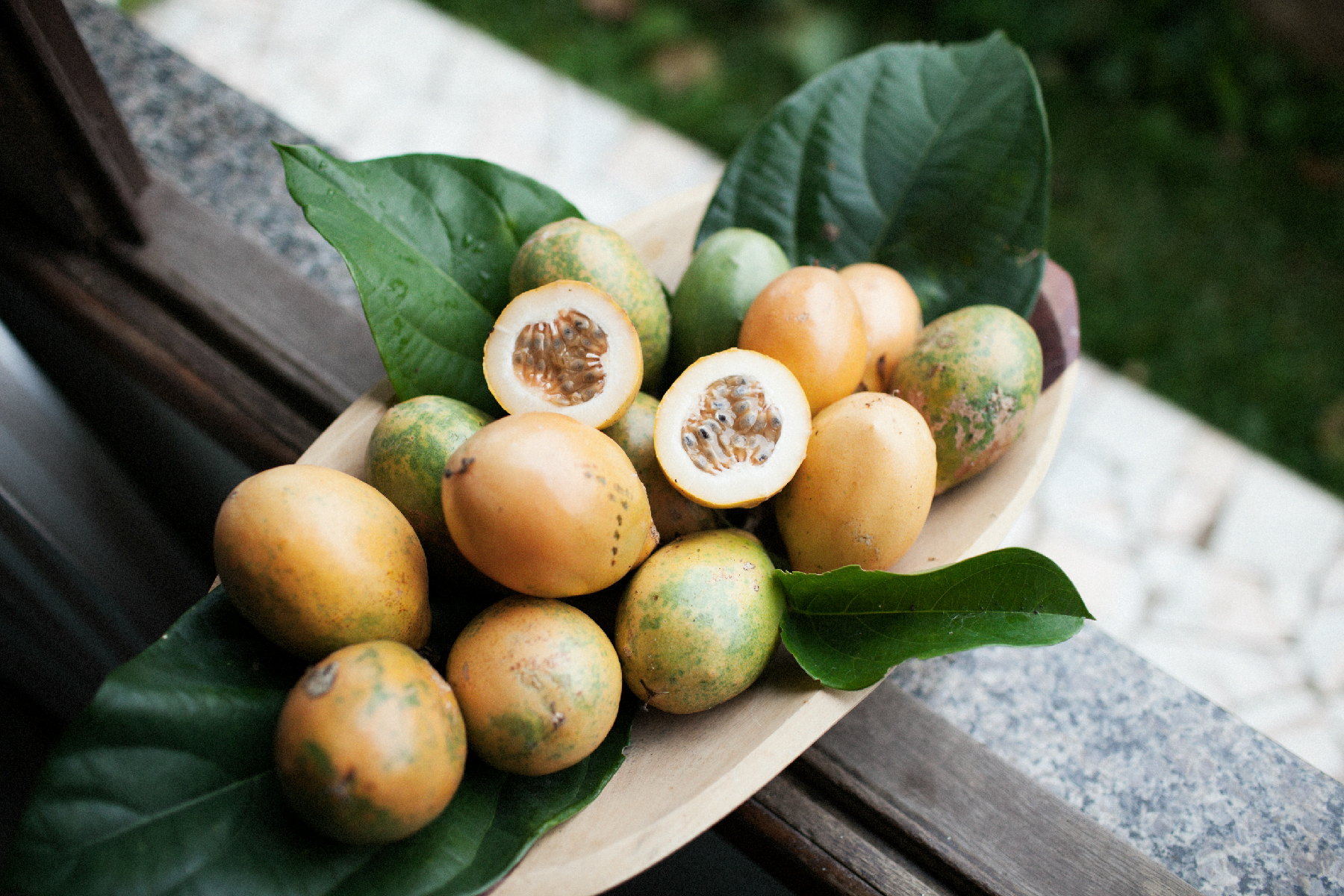
Freshly harvested passion fruit, revealing its aromatic pulp and jewel-like seeds. Photo credit - Marcello Aquino via unsplash.com
Harvest and Use
Fruit is ready to pick when it is fully colored and may start to wrinkle slightly on the vine or after harvest. That wrinkled skin is often a sign of ripeness, not spoilage. Inside, the pulp is fragrant, tart, and full of flavor. It can be used in drinks, sauces, desserts, and fruit salads, or simply scooped from the shell and eaten fresh.
Passion fruit provides fiber and several vitamins and minerals, including vitamin C and potassium. But for gardeners, its greatest appeal is the combination of beauty, fragrance, and flavor.
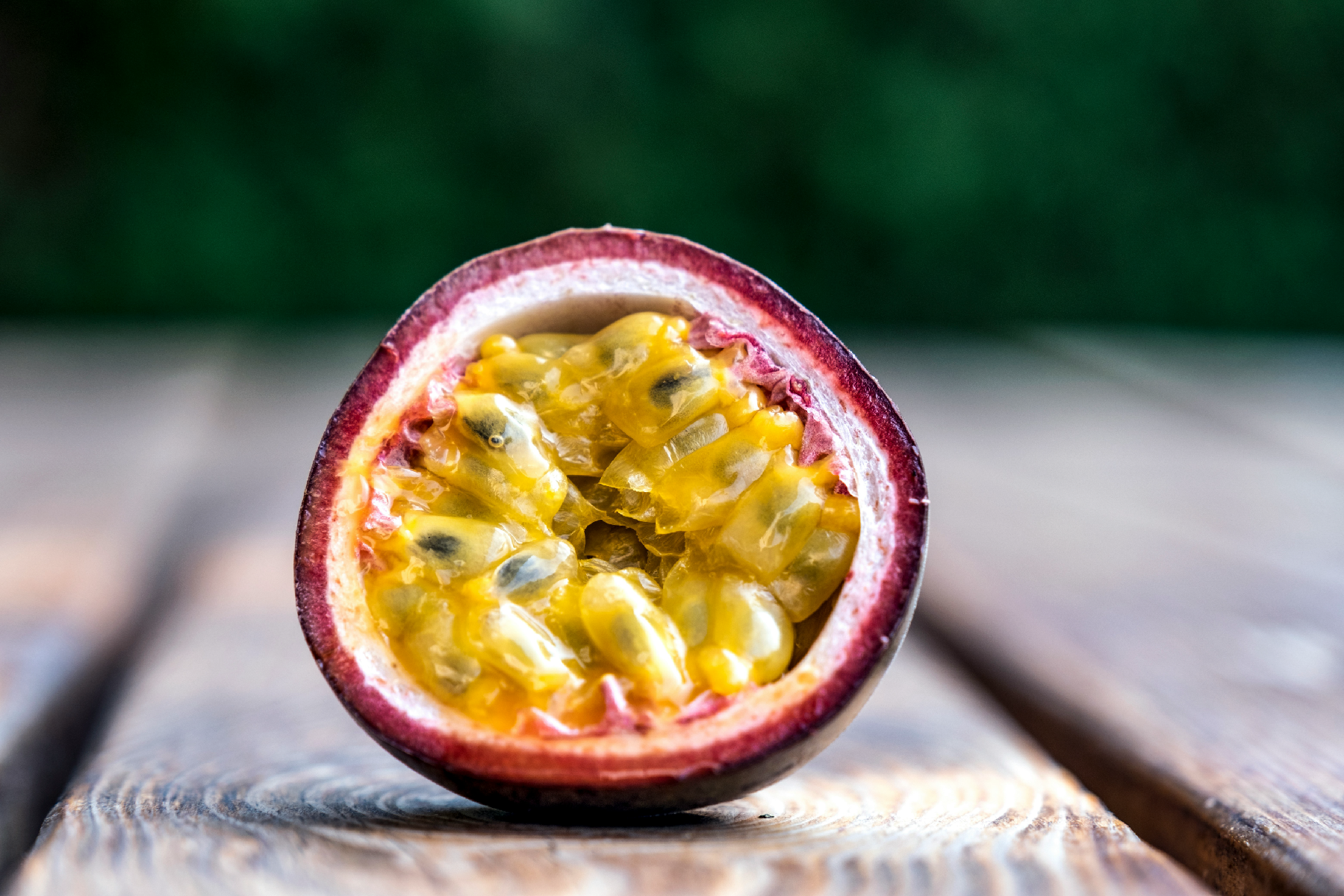
Harvested at peak ripeness, passionfruit offers a sweet-tart pulp. Photo credit – Michael Kucharski via unsplash.com
A Rewarding Vine
Passion fruit adds something special to a California garden. Its flowers are intricate and striking, its vine growth is vigorous, and its fruit is memorable. With the right site, support, and care, it can be a rewarding addition to any garden.
Biography: The author is an UC Master Gardener in San Diego, who has an interest in Bonsai cultivation and care, and especially taking trees that grow in the wild and training them to grow as bonsai. He also is interested in growing fruit trees and helping others with their orchards.
References:
- California Rare Fruit Growers, Inc. “Passion Fruit.” https://crfg.org/homepage/library/fruitfacts/passion-fruit/
- University of California Agriculture and Natural Resources, UC Cooperative Extension, Ventura County. “Passion Fruit.” https://ucanr.edu/county/cooperative-extension-ventura-county/passion-fruit
- UC Master Gardener Program, San Diego County. https://ucanr.edu/site/uc-master-gardener-program-san-diego-county
4. California Garden Magazine / San Diego Floral Association. https://sandiegofloral.org/CAGarden