

Moister meters
Proper Irrigation Can Solve Many Garden Problems
by Valorie Shatynski, UC Master Gardener
Our region formally enters the dry season very soon, and many weather variables that impact plants profoundly will begin to increase. The transition to warmer day and nighttime temperatures, lower humidity, dry winds, and a lack of rain are factors gardeners must consider. One of the most important practices for healthy gardens is proper watering and irrigation. Many problems in our landscapes and home gardens begin with improper watering that causes stress to the plants. Once stressed, plants become more susceptible to pests, soil disorders and environmental (weather) changes.
Now is the time to step back and assess the needs of your plants and the condition of irrigation systems, and if necessary, modify the systems and practices to better suit the needs of the plants in your garden and landscape. Begin with plant observation and monitoring soil moisture.
Plant observation:
First, know how your plants should appear when healthy, depending upon the season. This will allow you to recognize stress. For example, broadleaf plants that normally have shiny green leaves are stressed if the leaves look dull, faded or grey. Wilting and curling leaves as the day heats up are signs of stress, particularly in plants more shallowly rooted. Conversely, deeply rooted native and other drought tolerant plants vary widely in appearance through the seasons. Some naturally go dormant and appear dryer during the summer, while others are evergreen.
Soil monitoring:
The frequency of monitoring varies greatly depending on what is in your garden and landscape and where in this diverse county you live. Lawns, perennials, succulents, native plants and raised vegetable gardens all have different watering requirements. During hot weather, soil around young plants (including vegetables and potted plants), may need to be monitored daily; every few weeks may be adequate when monitoring around mature trees during more favorable weather. Examine soil moisture in the rooting zone to a depth of about 1 foot. Soil lightens in color and crumbles more easily when it is dry. Sample or test soil from the root zone in several different areas of the landscape to assess overall irrigation needs and determine whether water is being applied deeply and uniformly enough. If your irrigation system has zones, monitor several locations within each zone and note whether you have plants that require the same or differing water requirements within each zone.
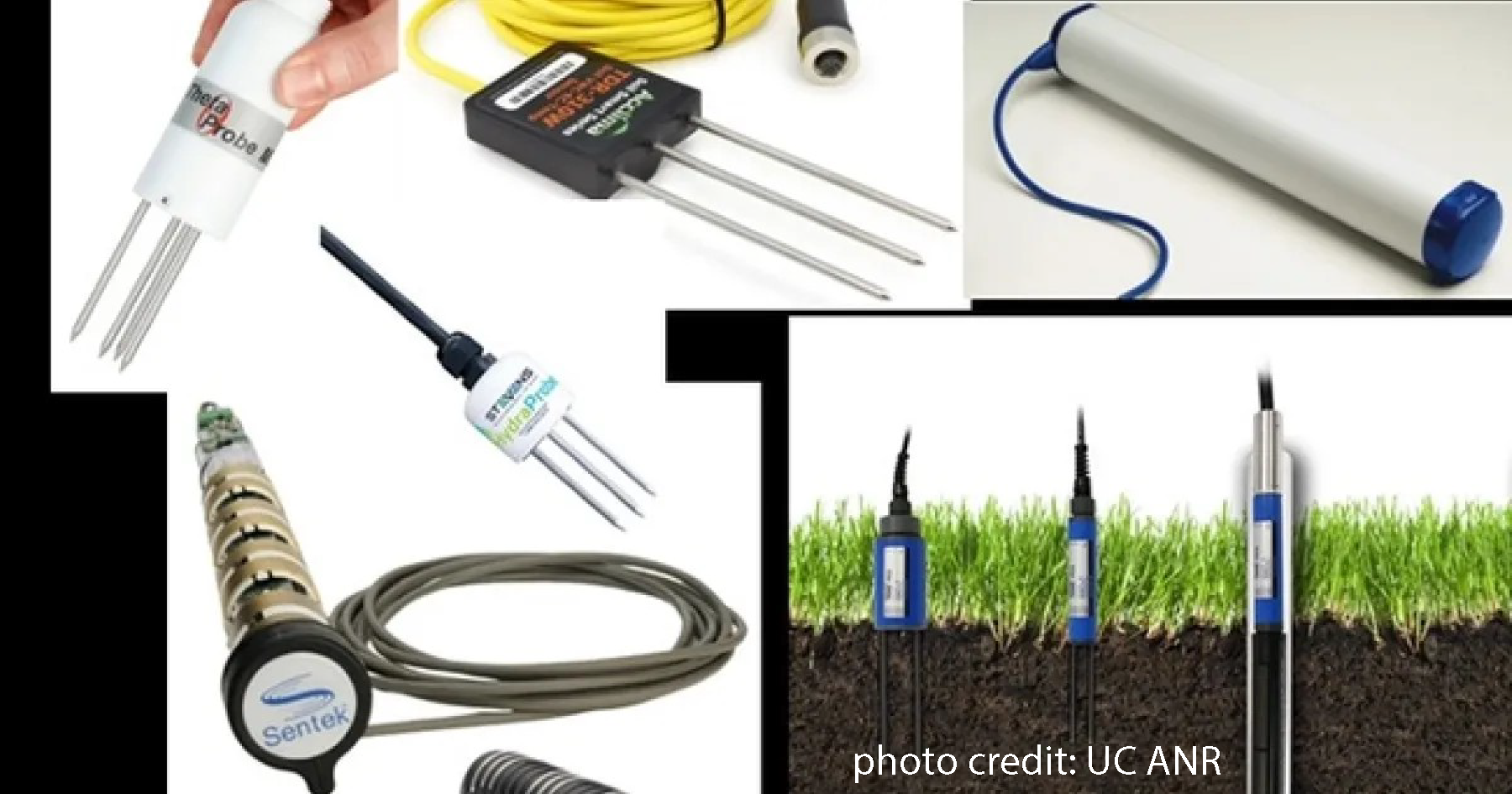
There are several methods to monitor soil moisture. One of the easiest methods is to use a soil moisture meter. They are available online and in most retail nurseries, for $10 and up. These devices are easy to use and reliable, and alleviate the need to dig or auger, causing less disturbance in the root system. The meters show a scale of 1 – 10, with one being the dryest and ten the wettest. The meter box is attached to a copper probe that is inserted in the soil at the desired depth. Generally, if the meter reading is around two on the scale, water is needed, and above four on the scale shows the soil is hydrated. The higher the reading, the more saturated the soil, and watering should be cut back.
An alternate method is to select the locations to test, then dig a shallow hole with a trowel near the base of the plant, taking care to minimize root injury. Gather a clump of soil from the hole in your palm and do the “crumble test” by compressing the soil in your hand. If the soil crumbles easily, it is dry. If the clump remains compressed, it is more hydrated. Another way to understand how your soil holds moisture in these different locations is the “percolation” method. Fill the holes with water, then time how long it takes for the water to be completely absorbed. If the water absorbs very slowly, the soil will hold moisture longer and less frequent watering is needed. Read how to do the water perc testing.
The bottom line is test often when seasons transition and even more often in the heat! Plants can fail quickly if not hydrated prior to a Santa Ana wind event which quickly dehydrates the entire plant or tree, as well as the soil. These events can be catastrophic. Finally, combine your observations for plant stress, moisture testing, and your knowledge of the plant needs in order to modify irrigation practices.
Irrigation system modifications:
Over time, over or under watering can make the plant more susceptible to disorders from pests or other microorganisms. Modification to watering practices should be considered for the needs of each specific plant type. A good rule is to group plants that have similar water needs on one circuit and then water uniformly in that area or zone. For example, some trees planted within lawn areas have different water and nutrient requirements. A common practice is to water lawns for very short periods (10 minutes or less). However, trees are deeply rooted and require less frequent watering for longer periods to ensure the root system is permeated. Tree roots that occur up in the shallow turf area are evidence that deeper, less frequent watering is needed. These large roots are up searching for moisture because water never permeates lower through the root zone. If the watering is done less frequently for longer periods, and early in the day, both the lawn and tree will benefit. Additionally, turf is less likely to develop rust and other moisture-borne diseases when watered very early in the day. Do your research and select a tree that is appropriate for planting in a lawn. A good resource for tree selection and information is the website SelectTree by CalPoly.
Learn more about over and underwatering on the University of California Agriculture and Natural Resources (UCANR) website regarding home landscape water deficit and excess.
Irrigation methods vary from hand watering to sophisticated drip irrigation systems that have soil moisture sensors. Some also have sensors that can monitor evapotranspiration (ET), a technical term for the amount of water that evaporates from the leaves and dissipates into the air.
Check irrigation systems regularly for leaks and broken emitters, and perform maintenance as needed. Run the system and adjust it if there is run-off onto hard surfaces. Many drip systems can accommodate a variety of emitters, which can be modified as plants mature and needs change. Irrigate trees around the drip line whenever possible for highest effectiveness, and avoid watering woody shrubs and plants at the trunk or base of the plant, as this will increase conditions for disease and pest invasion. If possible, install or modify systems around trees so they can be extended as the tree grows and the drip line expands. Soaker hoses are handy in this case.
Established, deep rooted plants should be watered less frequently for longer periods. Shallow rooted plants, potted plants, and indoor plants may need water more frequently, particularly if the soil dries out quickly. This is when the importance of soil moisture testing comes into play. Once the plants or area has been watered, test again daily or every few days to get an understanding of how quickly the soil is drying. Keep in mind that some plants always want moisture in the soil while others prefer to have less. Succulents are often victims of overwatering. In particular, native plants are adapted to getting moisture from above (rainfall), never drip at the base of the plant. Therefore, some gardeners prefer overhead irrigation sprinklers for native gardens and landscapes.
In summary, take a good walk around your garden and landscape to observe if your plants are stressed or healthy. Consider how irrigation may be modified as the summer nears to best prevent garden woes. That time spent can also be satisfying and enlightening. As you explore your landscape, please feel free to reach out to the Master Gardener Hotline via email with photos or call us. We are here to help! Come back next month to learn more about grouping plants with similar watering requirements and how to modify existing irrigation for mixed needs.
References and Resources:
San Diego County Master Gardener Hotline:
Southern California Seasonal Landscape IPM Checklist (monthly subscription delivered via email):
UCIPM Irrigation of Trees and Shrubs in Home Landscapes
Methods of Irrigation: Basin, sprinkler, and low-volume drip or soaker irrigation are used where irrigation is required to maintain most urban landscapes in California during the dry season.
University of California in the Home and Landscape website resource Estimating Irrigation Needs: