
Edible Flowers: Delicious and Beautiful
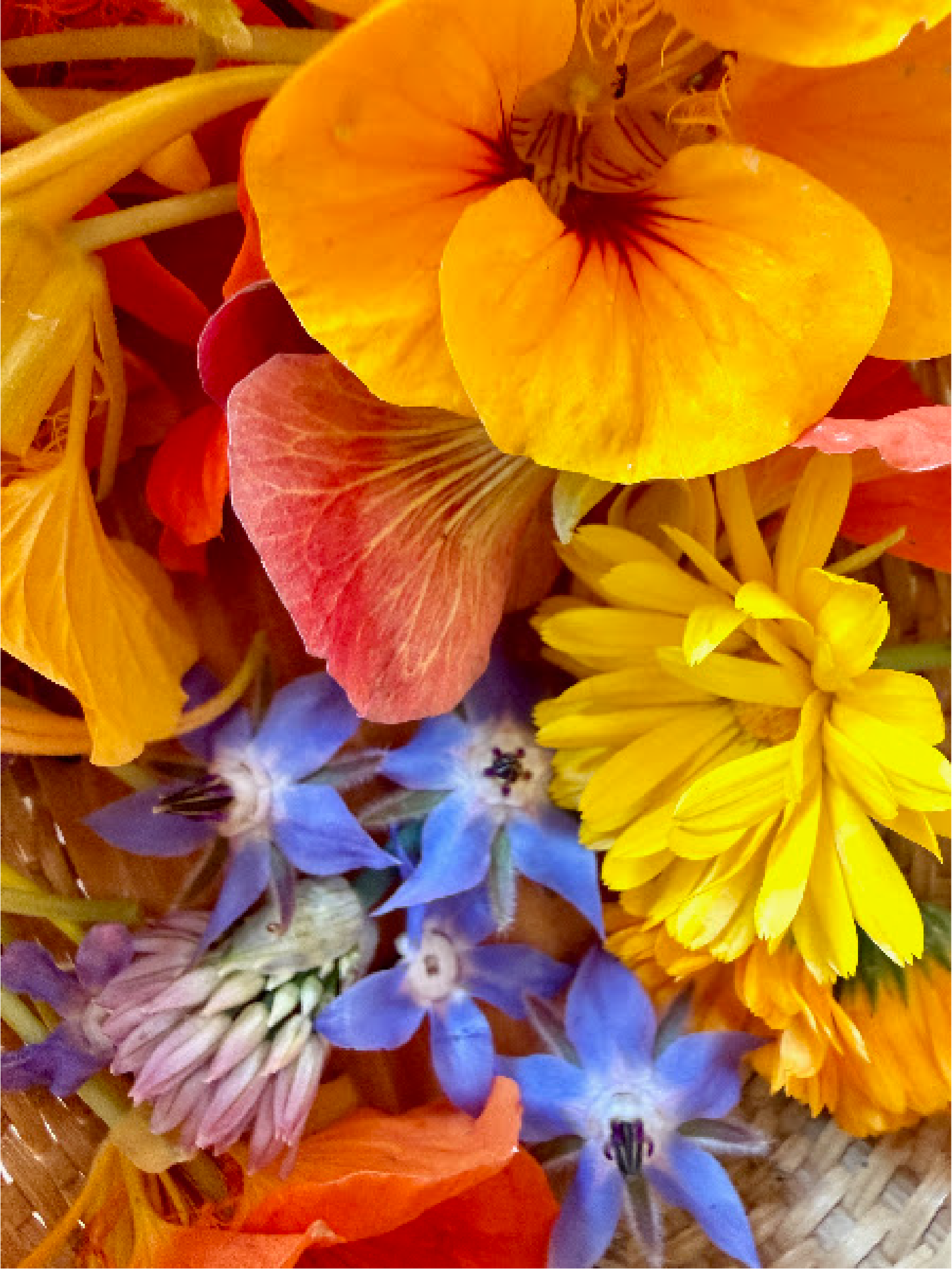
Freshly harvested nasturtium, calendula, and borage flowers showcasing the bright orange, yellow and blue petals. (Kim Bixel)
By Kriss Blumeyer
Edible flowers have been used for millennia to enhance culinary traditions, adding color, flavor, and a touch of elegance to a variety of cuisines. Many cultures around the world utilize flowers to add a festive note to both food and drinks. The archaeological record indicates even ancient humans incorporated flowers into their diets. Following a few simple rules will enable you to add beauty and flavor to your own culinary repertoire.
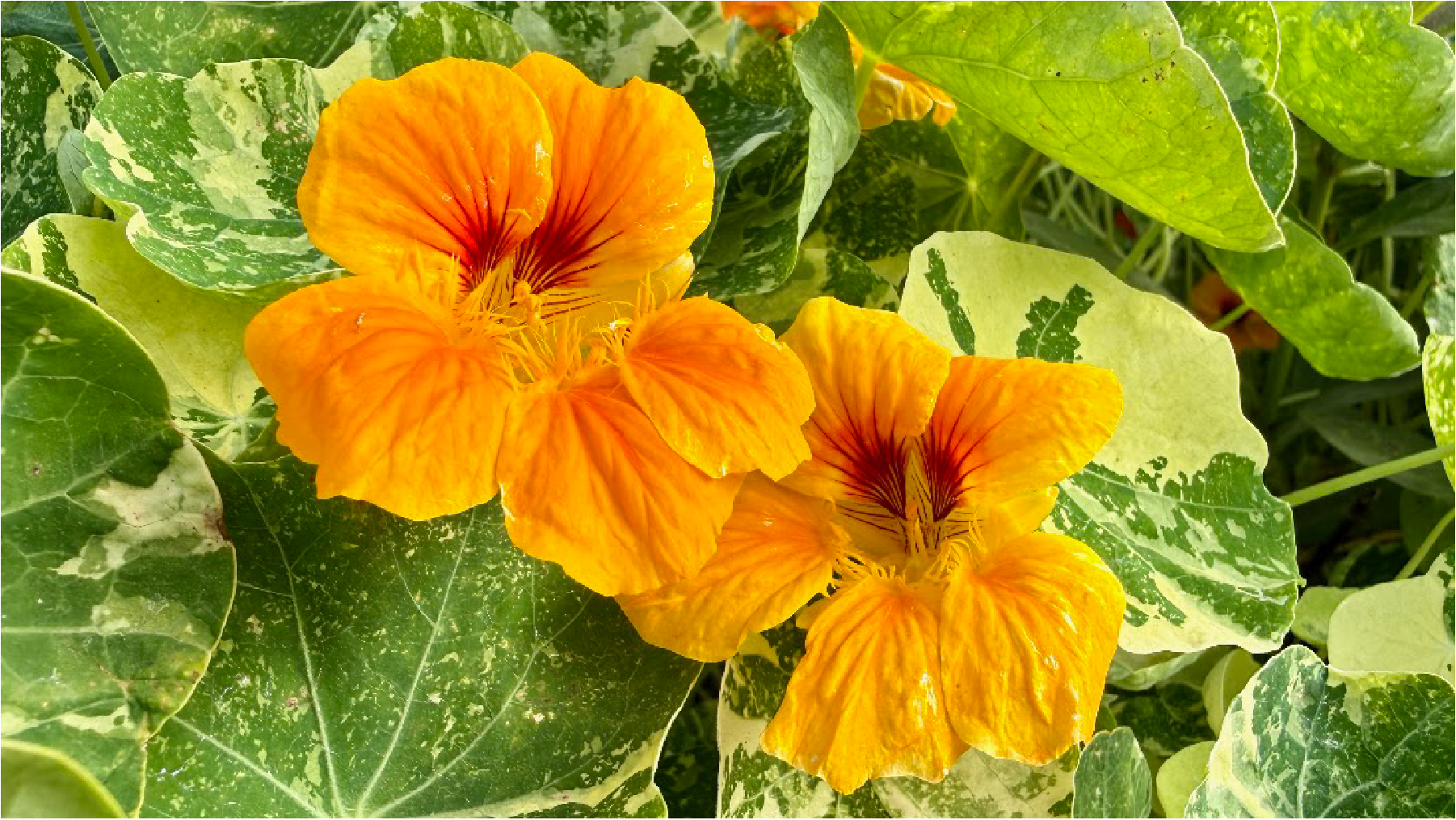
Easy to grow, nasturtiums add beauty to the garden and a peppery flavor to any dish.” (Kim Bixel)
The keys to successful use of edible flowers are relatively straightforward. First and most important is to correctly identify the flowers you are using! The most reliable method is to grow them yourself from a commercially purchased seed packet. Many are beautiful and easy to grow under a variety of culture conditions. The second critical element is to be sure that the flowers have not been treated with pesticides. If you grow your own flowers to eat, do not spray them with chemicals or add systemic pesticides to the soil. Be cautious about flowers purchased from a florist, farmer’s market, or other source unless they are specifically labeled for culinary use. Whatever the source, since the flowers are not sprayed it’s important to give them a gentle wash and inspect them for insects prior to using them in a dish. Finally, use flowers, particularly strongly flavored ones like lavender, in moderation and be aware that some people (as with any food) may be allergic.
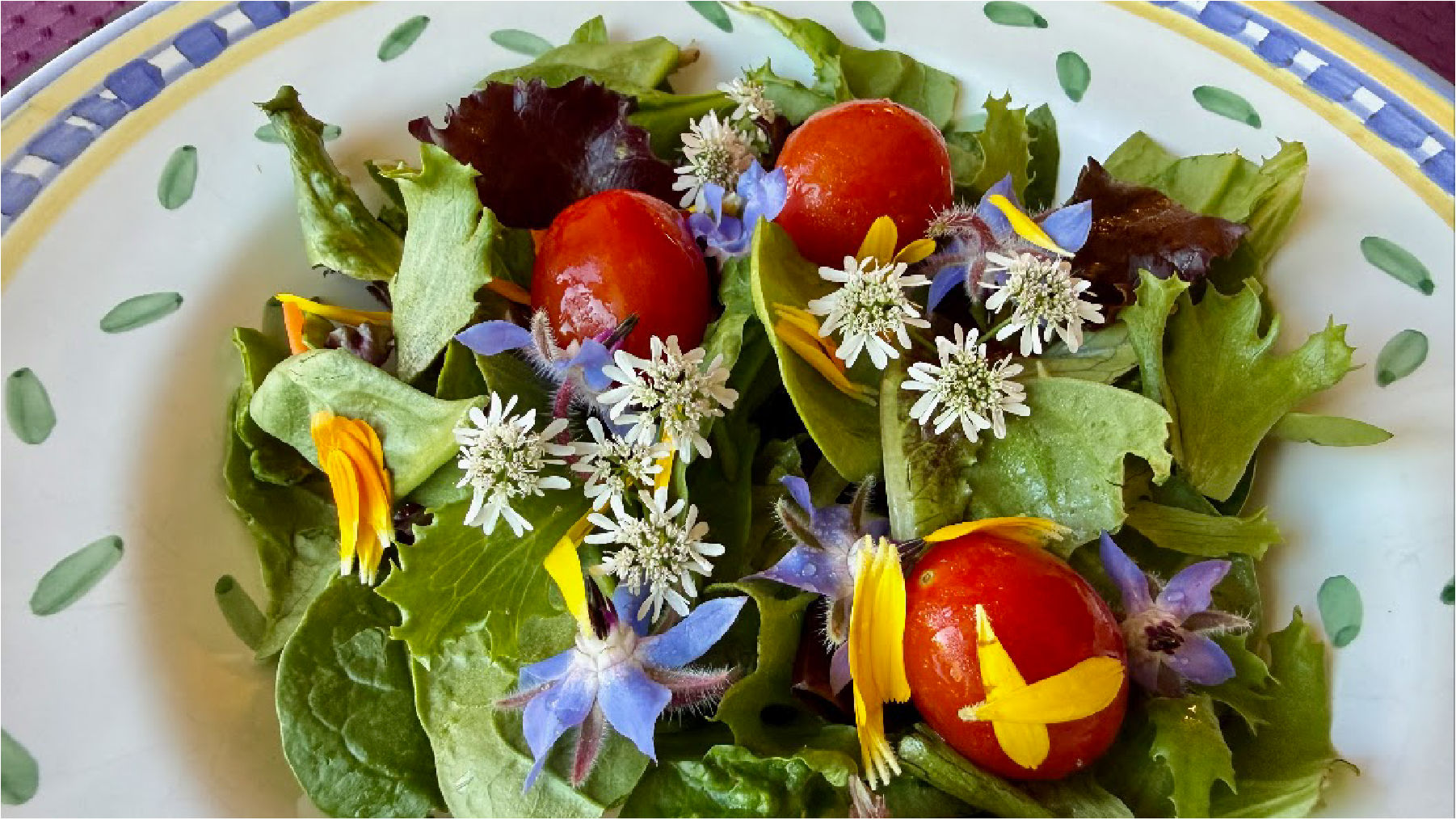
Freshly harvested nasturtium, calendula, and borage flowers showcasing the bright orange, yellow and blue petals.” (Kim Bixel)
Once you’ve decided to add flowers to your cuisine, what should you choose? Edible flowers have a wide variety of colors and flavors, so you may need to experiment a bit and use on-line resources (3) to get an idea of the flavor profiles and learn which parts of the flowers are palatable. Some lovely starter plants are Nasturtium (Tropaeolum majus) combining flowers in jewel tones of gold, red, pink, and orange with a peppery taste; Pot Marigold (Calendula officinalis) whose orange or gold flowers have a slightly tangy saffron-like flavor; and Borage (Borago officinalis) which has bright blue star-shaped flowers with a cucumber-like taste. The flowers of many herbs like basil and chives are also edible, providing a slightly sweeter herbal note than the leaves or stems.
There are endless ways to incorporate flowers into dishes. The easiest is to add flower petals directly to salads, mixed into the greens for a pop of color and taste. Candied or fresh flowers are elegant additions to cakes or tarts; use sweeter flowers like violas, violets, or rose petals. Flowers can be mixed or layered into home-made pasta dough to make interesting and beautiful noodles. Use bright blossoms like nasturtiums or flowers from herbs like basil, then finish with an additional sprinkle of petals so the dish really shines. Finally, teas, lemonade, and cocktails can be enhanced by flowers frozen into ice cubes or with infusions of dried flowers like hibiscus, lavender, or chamomile. Use very strongly flavored flowers like French lavender sparingly though, since they may be too much of a good thing.
Edible flowers are an easy and beautiful way to bring the magic of the garden to the dining experience. It can be so rewarding to learn which flowers are easy to grow in your environment, and which ones suit your personal taste. Above all, have fun exploring the many possible ways to add this new dimension to your culinary adventures.
References:
- “Eat Your Flowers – A Cookbook” by Loria Stern ISBN 978-0-06-320426-3
- Garden Notes “Growing Edible Flowers in Your Garden” https://ucanr.edu/sites/default/files/2013-07/164219.pdf
- “Edible Flowers: Fragrant and Tasty Treats” https://ucanr.edu/blog/real-dirt/article/edible-flowers-fragrant-and-tasty-treats
Kriss Blumeyer has been gardening in San Diego for over five decades. She loves to eat pasta with flowers because it is just so darn pretty and delicious.