

The Pageantry of Pincushion Proteas
by Nicolle Selby-Thomas
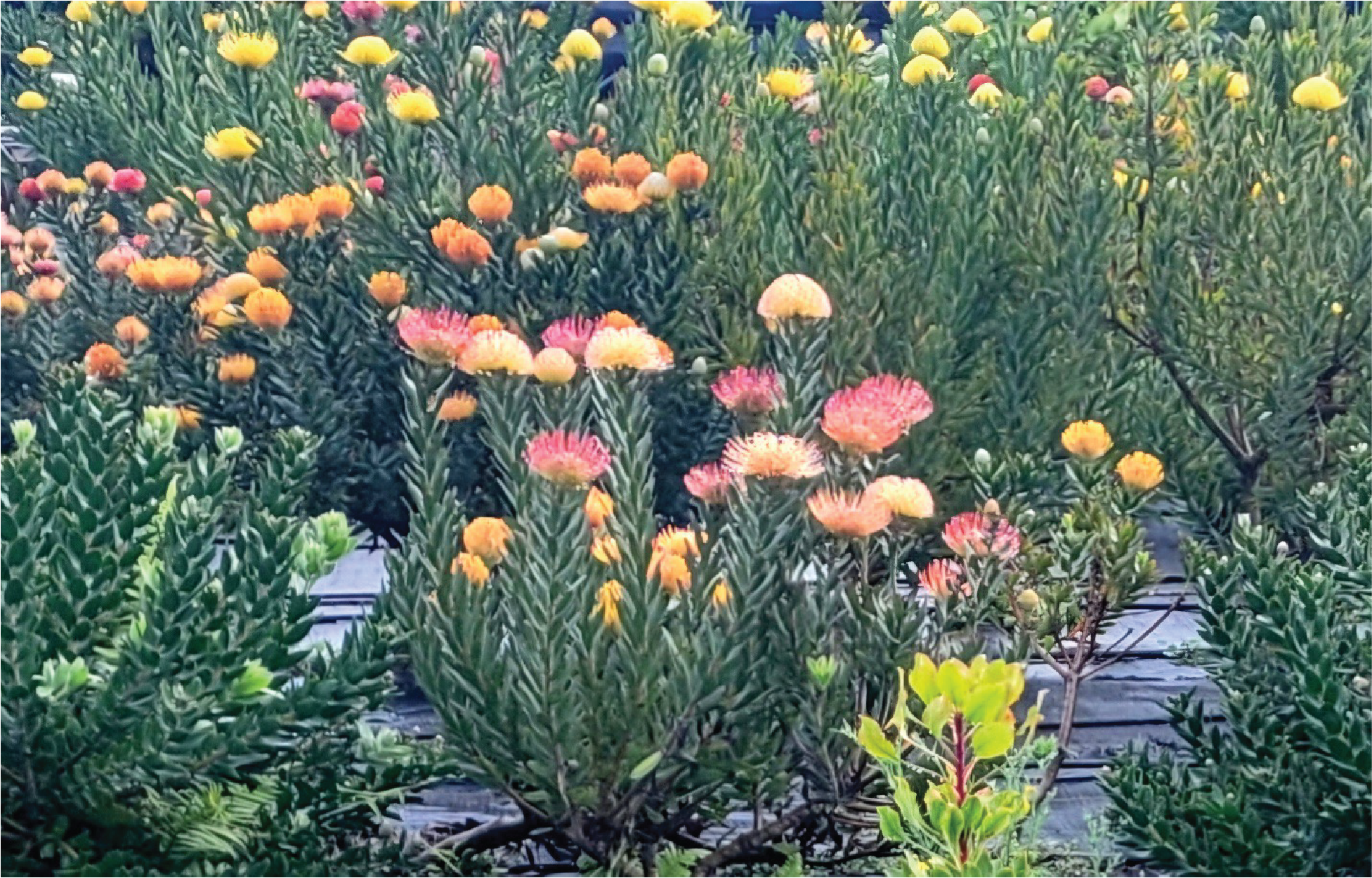
Why not try growing a type of Protea? The rich diversity of the Proteaceae family has made these plants popular. Over the years, they have become known simply as proteas. This plant family has gifted gardeners with unique, exotic plants and flowers. Our location in San Diego makes us fortunate to live in one of the few areas of the world where proteas thrive. Proteas are native to the Southern Hemisphere, with the largest populations found in Australia and South Africa. They have stunning blooms and are typically evergreen shrubs with leathery leaves; most have evolved in nutrient-poor soils and dry summers.
Nicolle Selby-Thomas
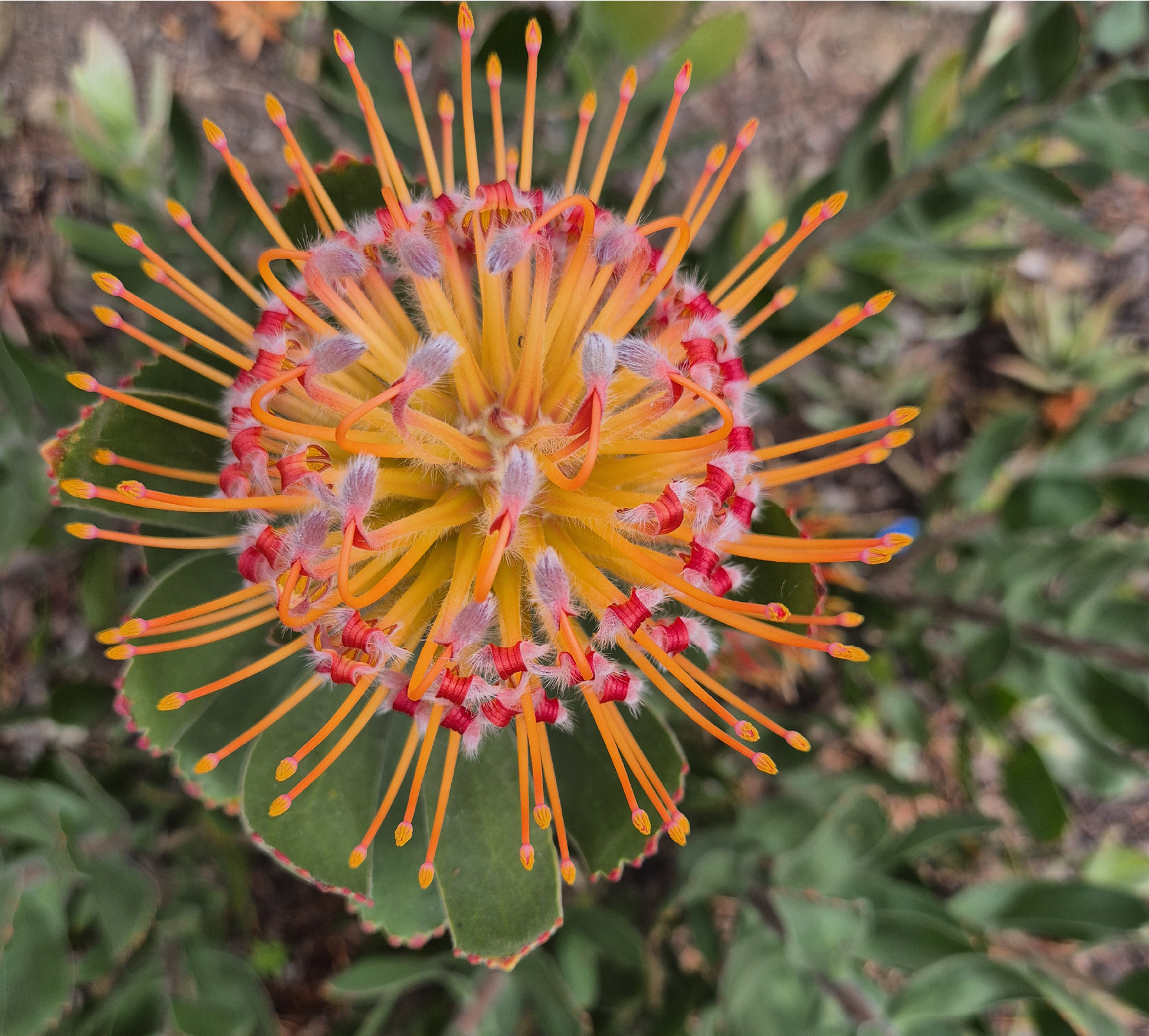
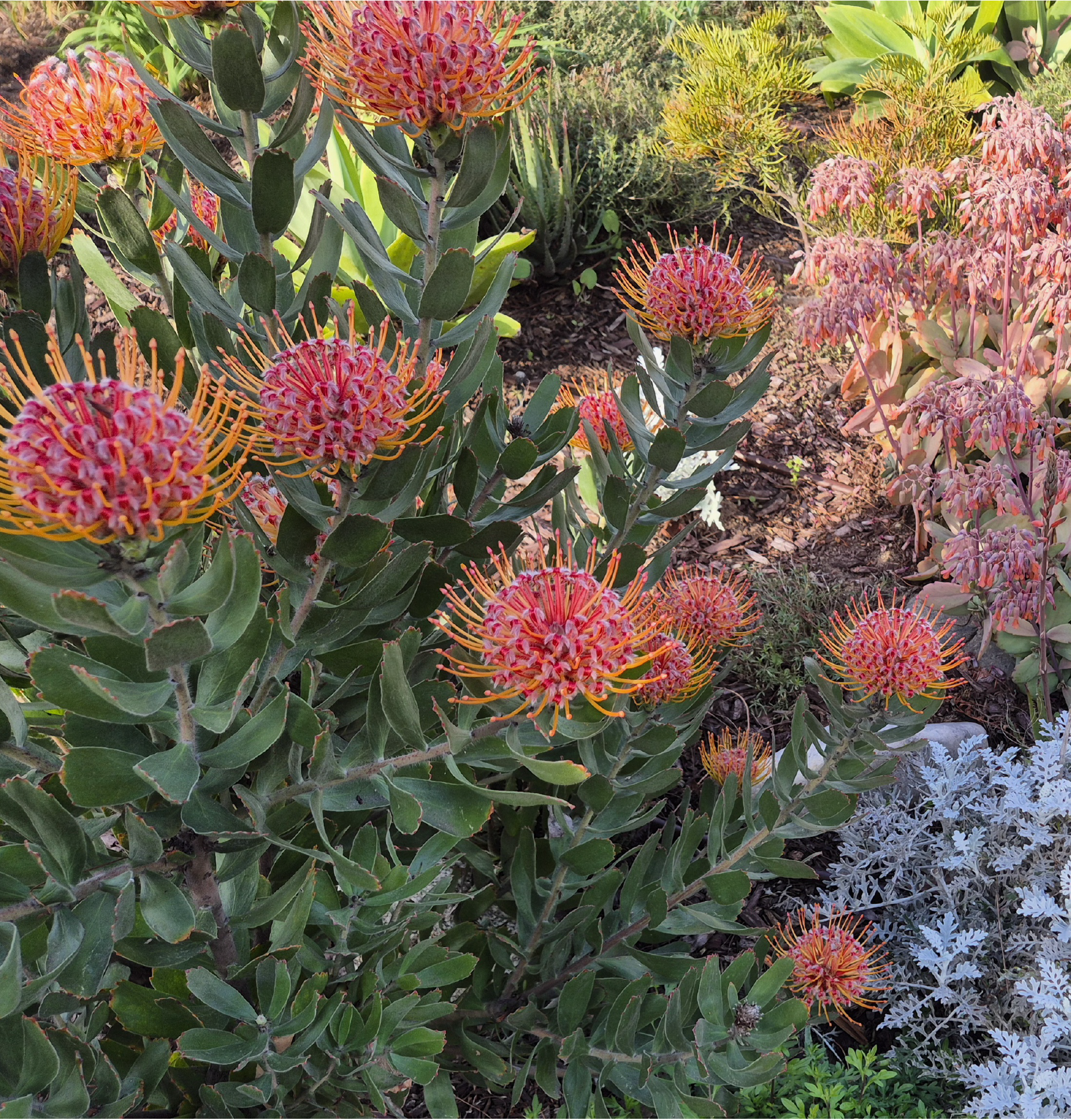
The cultivars of Leucospermum, commonly known as pincushion or pincushion protea, are my personal favorite and the focus of this article. Pincushion proteas make a statement in a shrub garden with their foliage form and flowers. They have spiky, round, unique flowers that come in a variety of colors, are easy to grow, and attract birds and pollinators. The cut flowers make bold arrangements and can last weeks with care (e.g., regular changing of the water, using a preservative in water, etc.). The flowers can also be dried and used as part of semi-permanent arrangements.
Nicolle Selby-Thomas
Not only are the flowers spectacular, but the pincushion plants grow well in many climate zones in San Diego County. Our personal coastal garden is in Sunset’s Climate Zone 24 and the pincushion shrubs in our garden flower in different rotations. The first group produces flowers from late February to early June and the second one produces flowers from June to August. Two plants in the first group were ready to flower again in July which would make a third blooming round. In general, our climate mimics the climates in Australia and South Africa where the winter months are wet and summer months are sunny, dry, and warm. The plants are pruned after the plant is done blooming. oot development occurs during our somewhat wet winter months, and vegetative growth is maximized during spring and early summer. To capitalize on this natural order of growth, new plants can be planted from November (sometimes earlier, but they may need more water) through February. This will allow the rain to irrigate the plants and get their roots settled before the dryness of summer/fall arrives. Pincushion proteas are typically not frost tolerant, so it may be prudent to delay putting in new plants if your garden is in a frost prone area.
Nicolle Selby-Thomas
The Leucospermum or pincushion proteas thrive on a level of neglect (e.g. no fertilizer needed, minimum water requirements, etc.). However, there are some key requirements that are important for these plants to grow and flourish:
Climate and Garden Location:
Proteas grow best in Sunset Climate Zones 16, 17 and 21–24. Generally, these coastal and thermal belt regions provide the necessary mild, frost-free winters and cool coastal breezes required for the plants to thrive. They need good air circulation, generally full sun, and protection from dry winds. It is recommended to position the plants in raised parts of the garden or on slopes with sun and avoid dips or lower portions of a garden as water collection in the soil and/or cold air could damage the plants. It is important not to overcrowd them as they can reach a height of six feet or more with an equal width at maturity in five to ten years.
Soil and Water:
Pincushion proteas need loose, well-draining soil such as loam. Soil such as clay will cause the water to be retained around the roots and will eventually cause the plant to die. These plants prefer soil that is basically low in nutrient content. Also, they prefer acid soils of around pH 3.5 – 6.5. Pincushion proteas generally need a low amount of water once established. Water at the base of the plants and avoid overhead watering. In most loamy garden soils, watering three times a week in hot weather should be enough. Young plants, generally less than 2 years old, require more water during the summer to ensure that they don’t dry out.
Root Systems and Fertilizer:
These plants have specialized "proteoid" root systems that absorb nutrients rapidly since they have evolved to survive in nutrient-poor soils. The proteoid root systems are tufts of fine, white waxy rootlets extending from the main roots (The Protea Book p.14). They often grow close to the surface of the soil. The plant’s root systems are highly efficient at extracting phosphorus. As such, fertilizers should typically not be used, as the high phosphate content of general fertilizers could harm or kill the plants. It is also recommended that the soil around the plant not be disturbed and/or the plant not be moved, as it creates problems with the proteoid root systems that are close to the soil surface and the damage can harm or kill the plant.
Pruning and Maintenance:
While the pincushion proteas are blooming, the dead flowers can be easily removed to encourage more blooming. Pruning is suggested to keep pincushion bushes compact, and is recommended after the flowering season ends. There are 3 stages of growth: old growth with woody stems, mature growth, and new growth. It is suggested to prune after the flowering ends by using clean, sharp clippers, cutting at a 45-degree angle approximately 2” below any new growth. Pruning will encourage new growth and keep the bush from becoming “leggy”. As a caution, don’t cut into old, bare wood as it may cause the plant not to produce new shoots again, particularly with older bushes. Mulch can be used around the plant to keep the soil cool and undisturbed. Keep the planting site free of deeply rooted grasses and weeds, as they will compete for nutrients with the surface root systems. Again, try not to disturb the soil, so remove any weeds by hand and do not vigorously dig them out.
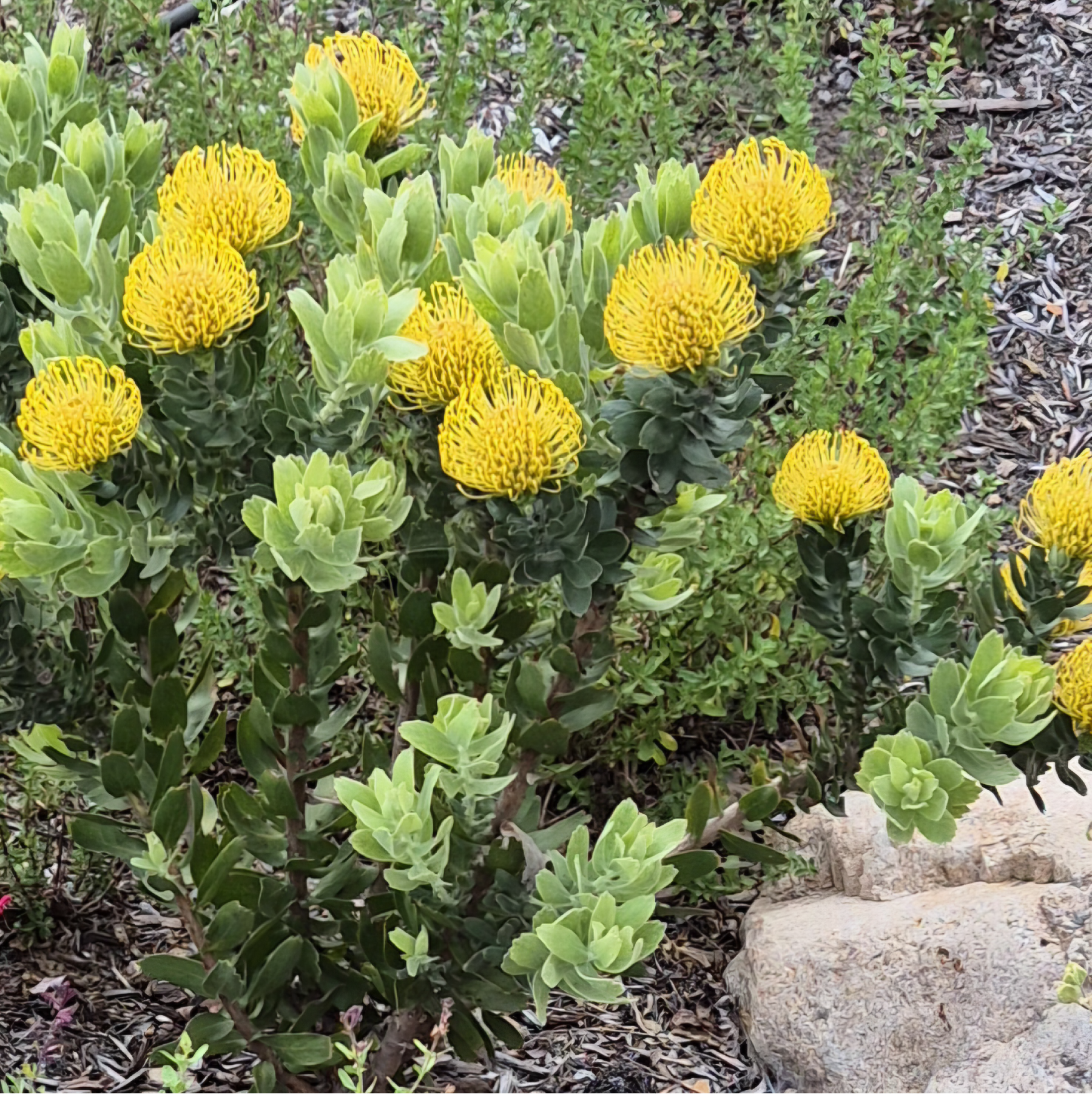
Give Pincushion proteas a try if you haven’t already! They are a satisfying shrub to grow with their unique spherical flowers that come in array of vibrant colors. They are a good match for San Diego’s climate, require minimum care, thrive in poor, well-draining soil, and are generally drought tolerant. Our birds and pollinators love their nectar-rich blooms.
Nicolle Selby-Thomas
References:
Furguson, Alan M, So You Want to Grow Proteas: A Beginners Guide. Valley Center, California: California Protea Association Inc., 1999.
Matthews, Lewis J., The Protea Book: A Guide to Cultivated Proteaceae. Portland, Oregon: Timber Press, Inc., 2002.
Editors of Sunset Books and Sunset Magazine. Sunset Western Garden Book. Menlo Park, California: Lane Publishing, 1988.
Patty Busick Smith, Courtesy of UC Master Gardeners of San Luis Obispo County. “How to Prune a Leucospermum”, You Tube video, 7minutes, 33 seconds, August 16, 2023. https://www.youtube.com/watch?v=X_HISiXiYY8
Nicolle Selby-Thomas has been a San Diego Master Gardener since 2023.