

Growing your own grapes for wine
Here are recommendations for planting needs and a timeline to set up a home vineyard
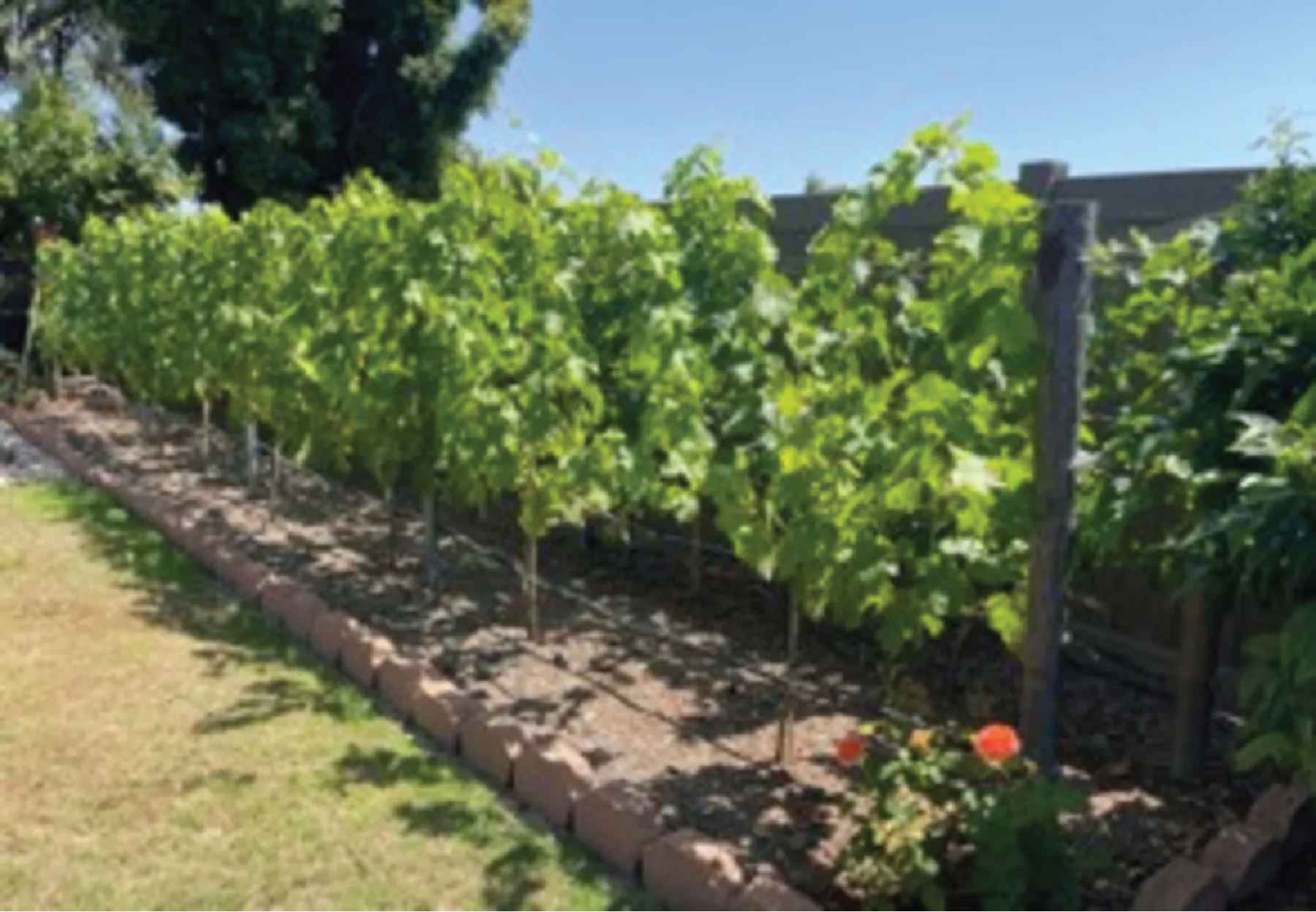
A VSP (vertical shoot positioning) trellis for 12 vines using a 10-foot by 5-foot footprint. (Susan Pacheco)
By Susan Pacheco
(This article originally appeared in the September 12, 2026 edition of the San Diego Union-Tribune)
The last time you enjoyed a glass of wine, did you even wonder how many grapes it took to produce the bottle you poured it from? With a little planning and patience, it is possible to grow wine grapes in a home garden and produce a few cases of wine for your own enjoyment and sharing with family and friends.
Grapevines are a perennial plant that changes with the seasons and improves with age. It’s planting the right variety of grapes and the right number of vines that will enable you to produce your favorite wines. Add a little advanced planning and some patience, and you’ll be sipping and sharing before you know it.
Generally, and depending on the varietal you choose to plant, a wine grapevine can produce 8 to 12 pounds of seed-containing grapes per vine. The Vitis vinifera varietal (including cabernet sauvignon, chardonnay and zinfandel), grafted onto a rootstock that is disease-resistant to phylloxera, is the ideal type of wine grapevine. Table grapevines are not suitable for winemaking due to their lower sugar levels at ripening.
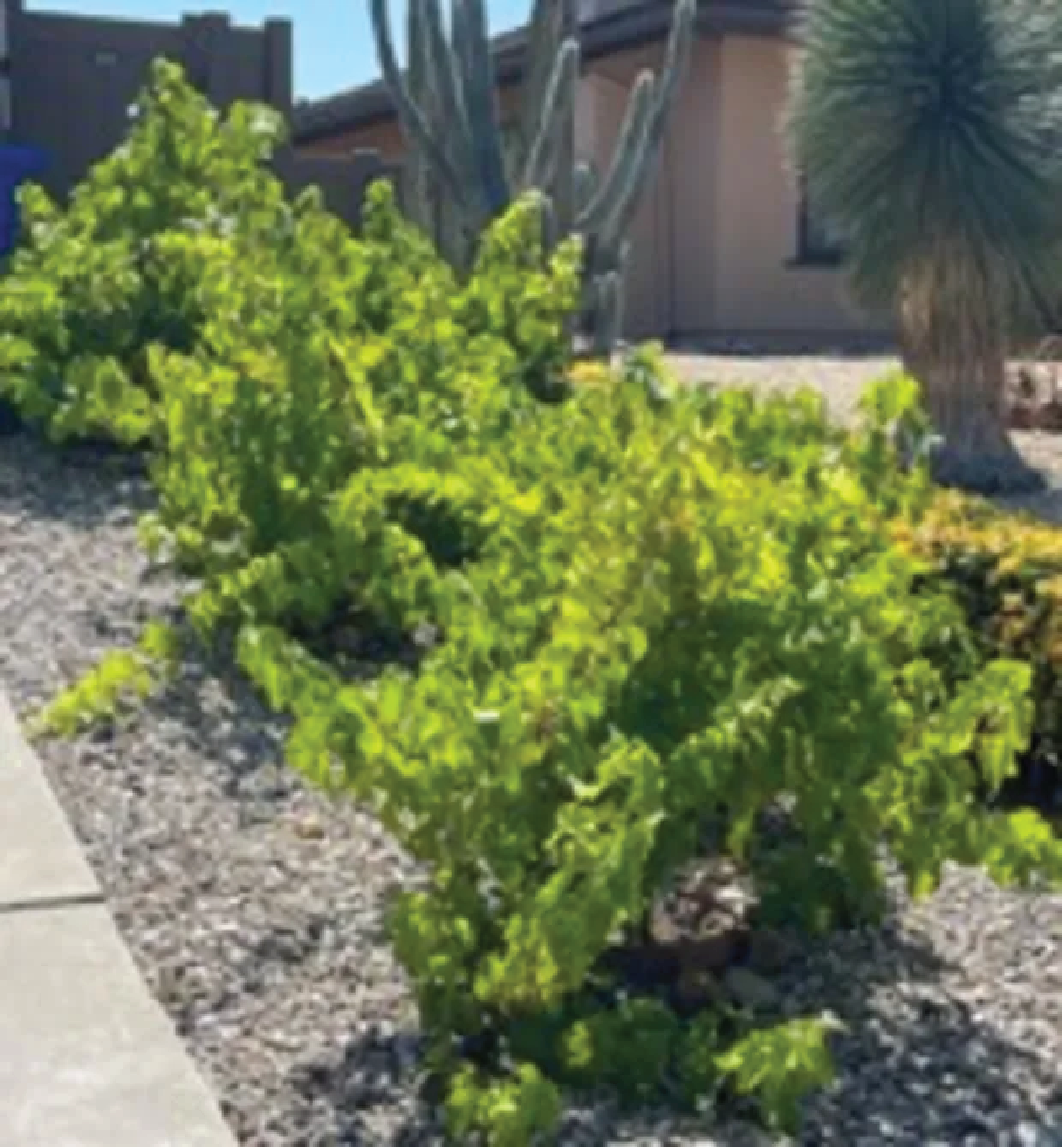
Head-trained or “goblet” style standalone vines using a vertical rebar support system using a 4-foot by 4-foot footprint. (Susan Pacheco)
To produce 2 1/2 to 3 1/2 cases of wine, you can expect to plant roughly 8 to 12 vines, and harvest 64 to 144 pounds of grapes, resulting in 4 to 9 gallons of wine or 20 to 45 bottles of wine. One gallon of wine is approximately five 750 ml bottles. Variability in yields depends on characteristics of the grape variety chosen.
Once the type of grapevine is selected, the planting area should meet the following criteria: eight hours of direct sunlight, good air flow, temperatures generally above 80 degrees during ripening time from July through September, good drainage, drip irrigation, and monitoring for disease and pest potential in your area. For more detailed information regarding potential disease and pests, and solutions if these occur on and around your grapevines, refer to the Integrated Pest Management Guidelines, from the University of California Agriculture and Natural Resources link: ipm.ucanr.edu/agriculture/grape/#gsc.tab=0.
Before the vines are planted, you should decide on a support system and install drip irrigation. There are many possible support systems depending on your home garden layout. Two common methods are a trellis system assembled with two end support posts and wire for multiple grapevines such as VSP (Vertical Shoot Positioning), and pre-assembled arbors for one or two grapevines. Non-trellis supports are head-trained or “goblet” style as a stand-alone bush with a single rebar as support. An internet search can provide more detailed information and pictures.
Grapevines are typically planted as bare root vines in the late winter/early spring while they are dormant. Planting at that time of year will provide a suitable growing climate to begin establishing a strong root system for many years of fruit production.
The first three to four years of your vine’s life are used to develop a strong root system, train the vine’s structure above ground for a thick, sturdy trunk, and establish strong canes and spurs, i.e. horizontal branches with vertical shoots, to support multiple clusters of grapes. A minimum of three years of vine growth is recommended before allowing fruit to develop and harvesting grapes.
Year One will be the planting year and establishing the vine’s root system and above-ground growth. A protective grow tube and bamboo stake are used to support and protect the young vine, which will grow out of the tube and need no training this first year. Winter pruning will cut all growth back to two buds on the trunk.
In Year Two, the root system continues to build. Shaping the vine begins as it again sends out new shoots. Any fruit clusters that begin to sprout should be removed as soon as they are noticed.
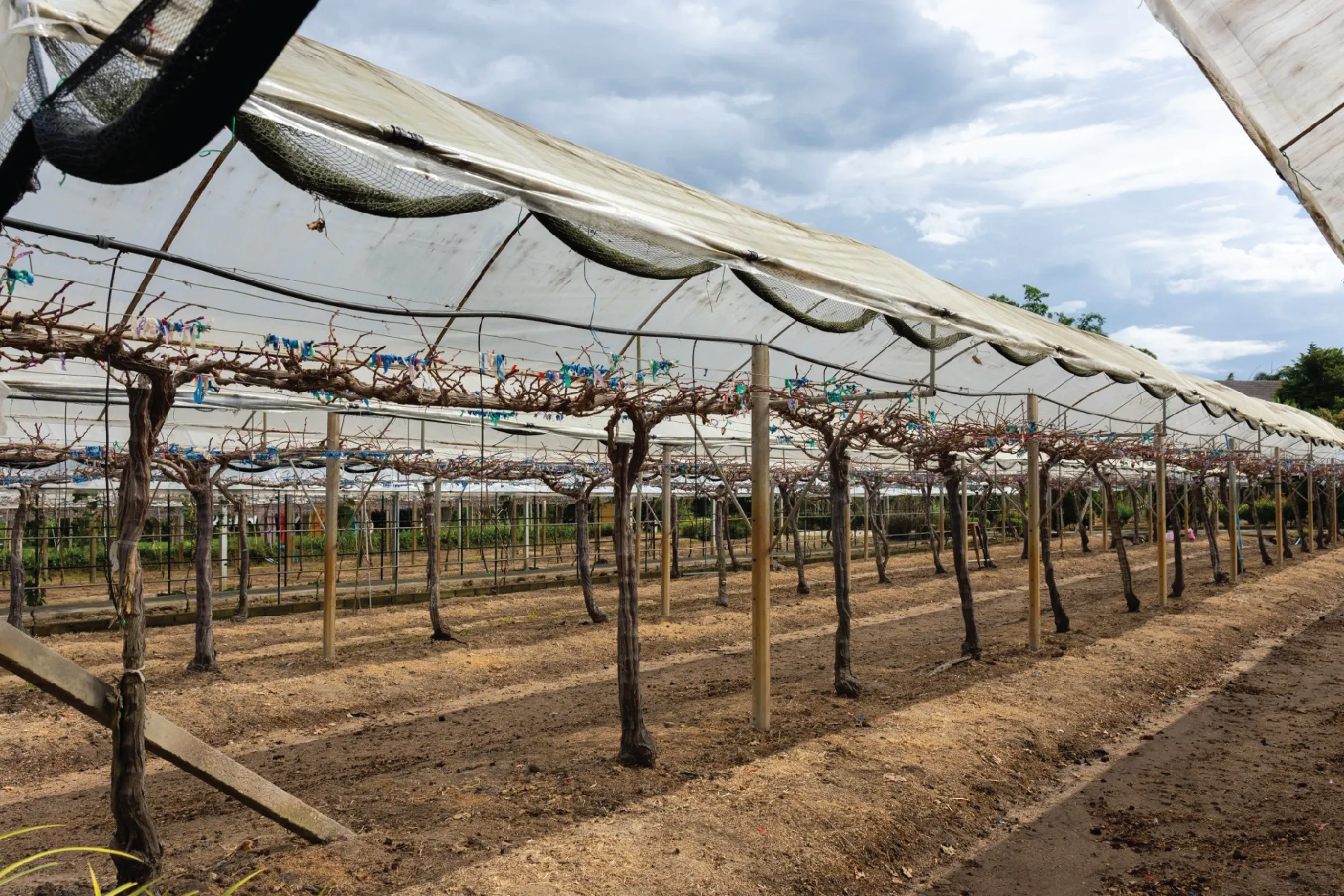
A minimum of three years of vine growth is recommended to establish a strong root system before allowing fruit to develop and harvesting grapes. (Adobe Stock)
In Year Three, the root system continues to develop, and the vine is further shaped with several options for laying a cordon, i.e. branch, horizontally along a wire suspended between two posts, threaded through the lattice of an arbor, or branching out for a “goblet” shape with a head-trained vine style. It remains important to remove fruit clusters this third year to continue developing a healthy root system and vine structure. This is because fruit development consumes much of the vine’s energy, so removing the fruit at this point allows the vine’s energy to continue to develop a strong cordon, canes (vertical shoots), and root system.
Year Four now rewards you with a strong root system, strong structured cordons, canes, and lots of grape clusters to harvest for your winemaking. The grape clusters will bud out on the spurs (pruned canes) which by now are supported on several years of older wood.
After the fourth year, the vine’s structure is established and vine care will settle into a monthly routine of scheduled irrigation, pruning in late winter, spraying for disease and pest control such as powdery and downy mildew, thinning leaves around clusters for positive air flow, trimming overgrowth, and harvesting late summer or early fall.
Joining an amateur grape growing and winemaking group such as the San Diego Amateur Wine Society (sdaws.org); accessing the Master Gardener Association of San Diego “Hotline” (858-822-6910, mastergardenersd.org); and subscribing to various subject matter publications such as Winemaker Magazine (winemakermag.com) are a few resources for additional research and planting/growing tips.
Pacheco has been a San Diego Master Gardener since 2020. She maintains a 70-vine hobby vineyard at her home in La Costa and produces amateur award-winning wines in her hobby winery.