

Weird and Wonderful Carnivorous Plants
by Kim Schultz
(This article originally appeared in the September / October 2026 "California Garden" magazine)
Carnivorous plants have captured the popular imagination since 1875 when Charles Darwin first published Insectivorous Plants. Killer plants have shown up in everything from Little Shop of Horrors to the Harry Potter series, but real carnivorous plants are a striking addition to any home garden. “They really represent how weird and wonderful the natural world is,” Aria Huerta, President of the San Diego Carnivorous Plant Society (SDCPS) shared. “There are so many different kinds of carnivorous plants, and watching them catch bugs in their own unique ways never gets old.”
Carnivorous plants are predatory flowering plants that trap and kill prey from which they extract nutrition. They can be found on all continents but Antarctica. There is an entire category of non-carnivorous but murderous plants which kill animals and insects with no nutritional gain. To be a carnivorous plant, the plant must:
- Trap and kill prey
- Have a process to help them consume or digest the prey
- Use nutrients from the prey as their primary source of energy
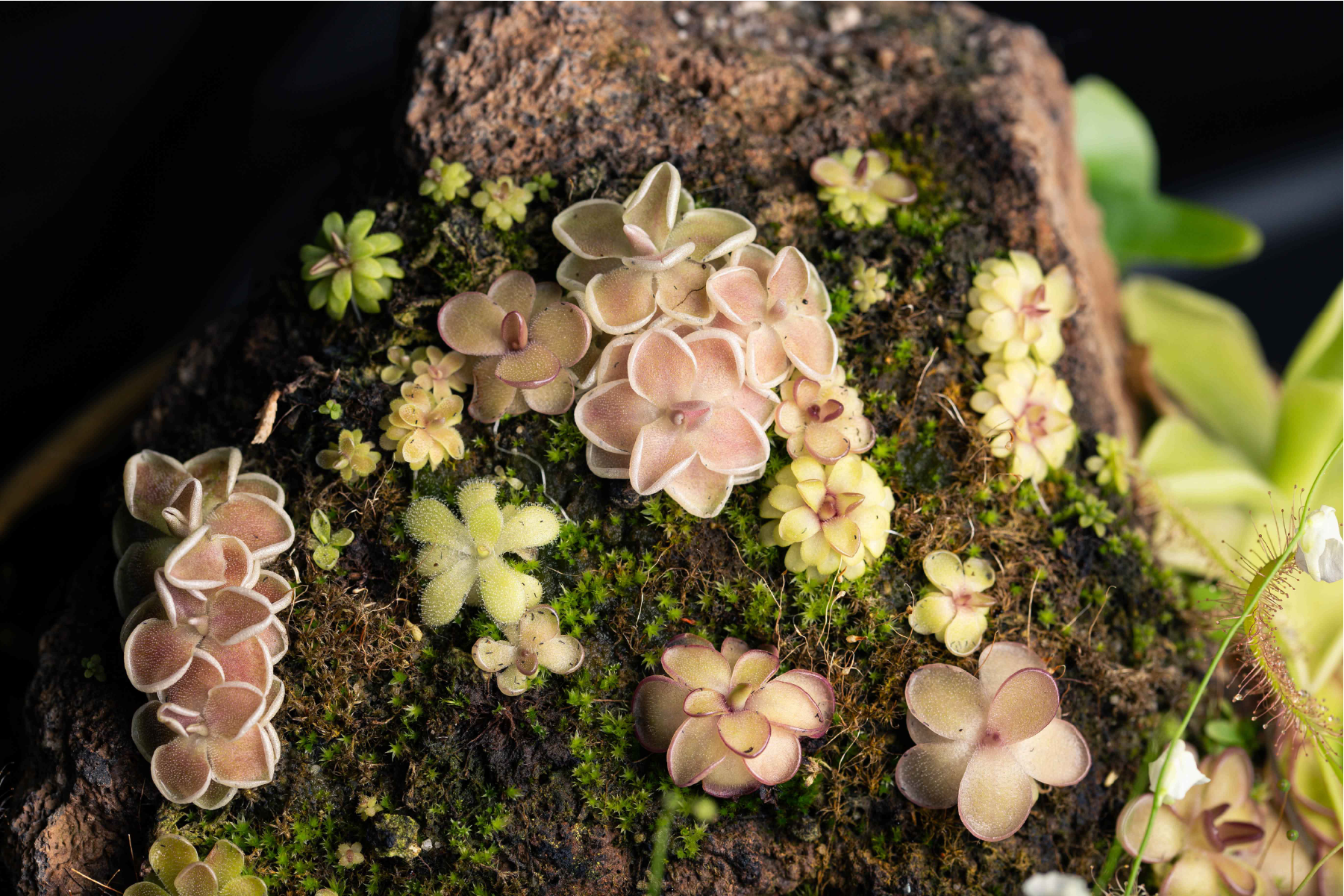
Many Pinguicula or “pings” originated in Mexico. Photo credit: Francis Bauzon, SDCPS.
What is prey, exactly? Carnivorous plants eat organisms as small as protozoans, insects, and spiders and as large as crustaceans, lizards, mice, and other small vertebrates. The mechanism for trapping their prey varies widely from species to species, and the carnivorous plants that do well in San Diego County reflect that diversity. Sundews (Drosera) and butterworts (Pinguicula or “pings”) feature adhesive traps, where a sticky or resinous mucilage traps small creatures. Pitfall traps have leaves designed to force prey to fall into an inescapable pit, found in most North American pitcher plants (Sarracenia) and Asian pitcher plants (Nepenthes or “neps”). Cobra lilies (Darlington) use a lobster pot trap, where prey easily finds its way in but cannot find the exit. Everyone who has seen a Venus flytrap (Dionaea muscipula) recognizes their snap traps. However, a carnivorous plant won’t harm its pollinator with its flower; that would be counterproductive to the plant’s survival.
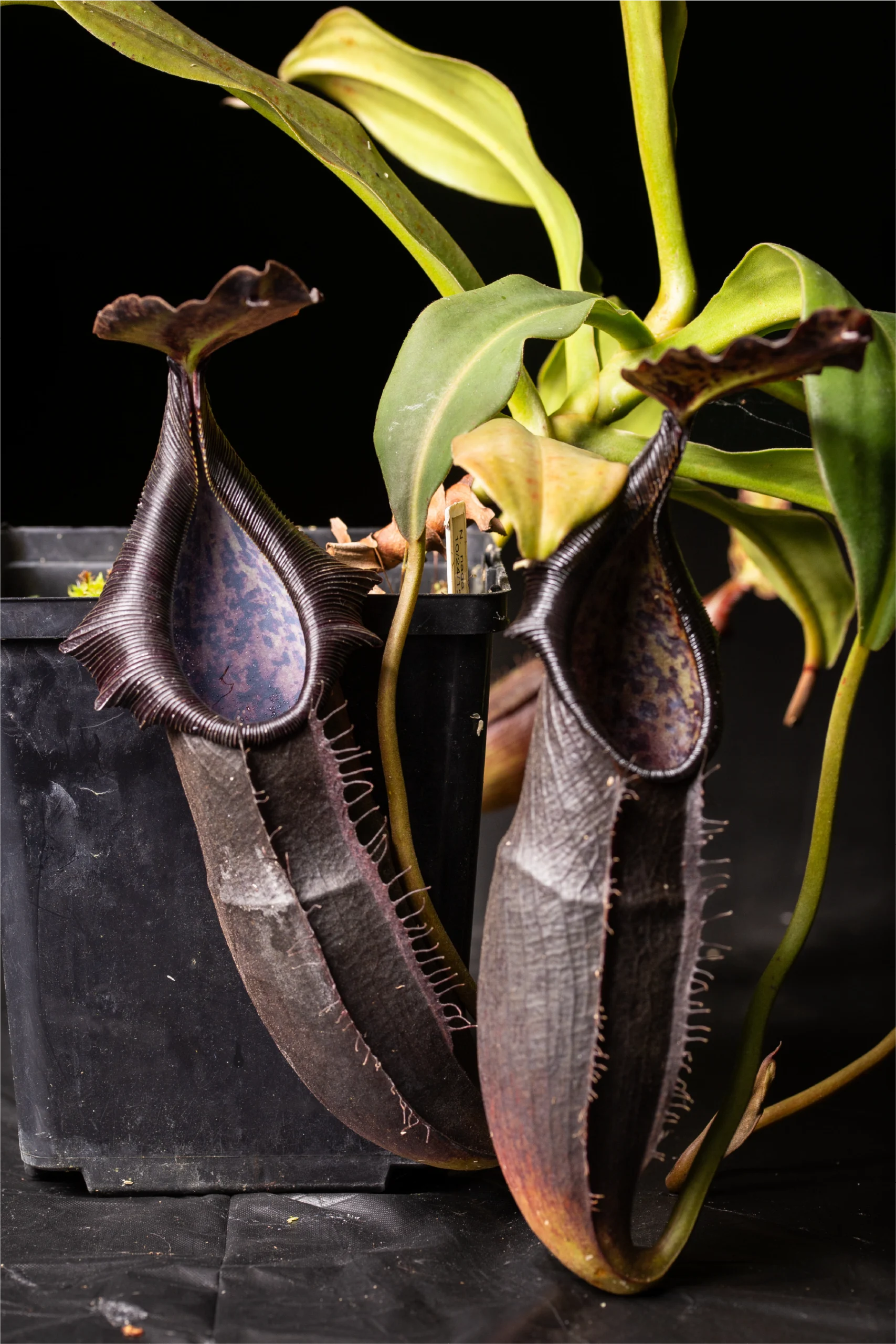
The dark coloration of Nepenthes naga makes it one of the most striking of the Asian pitcher plants. Photo credit: Francis Bauzon, SDCPS.
Since carnivorous plants feed themselves, the home gardener only needs to supply distilled water, no additional fertilizer required. In coastal and inland San Diego County, many carnivorous plants can thrive outdoors without a greenhouse, while some grow better indoors as a houseplant (and may even take care of pests like fungus gnats). Care needs like soil mix and moisture level vary by plant family, but the one element all carnivorous plants need to thrive is good quality water. Using distilled water, reverse-osmosis (R/O) water, or captured rainwater is critical; tap water in San Diego has too many dissolved minerals for carnivorous plants to thrive. When creating a soil mix for any variety, ensure no fertilizer was added to soil components.
Varieties that do well locally include Venus flytraps (Dionaea muscipula), North American (Sarracenia) and Asian (Nepenthes) pitcher plants, sundews (Drosera), and the brilliantly blooming butterworts (Pinguicula). The SDCPS (www.SanDiegoCarnivorousPlantSociety.com) offers free growing guides and events to help people care for carnivorous plants. They’re happy to help San Diego gardeners find beautiful, responsibly-sourced carnivorous plants for their home. As Aria Huerta explained, “[Carnivorous plants] really bring out the kid in people and foster a love for the natural world. Getting rid of some pesky bugs in your home or yard is an added bonus!”
Kim Schultz has been a UC Master Gardener since 2023
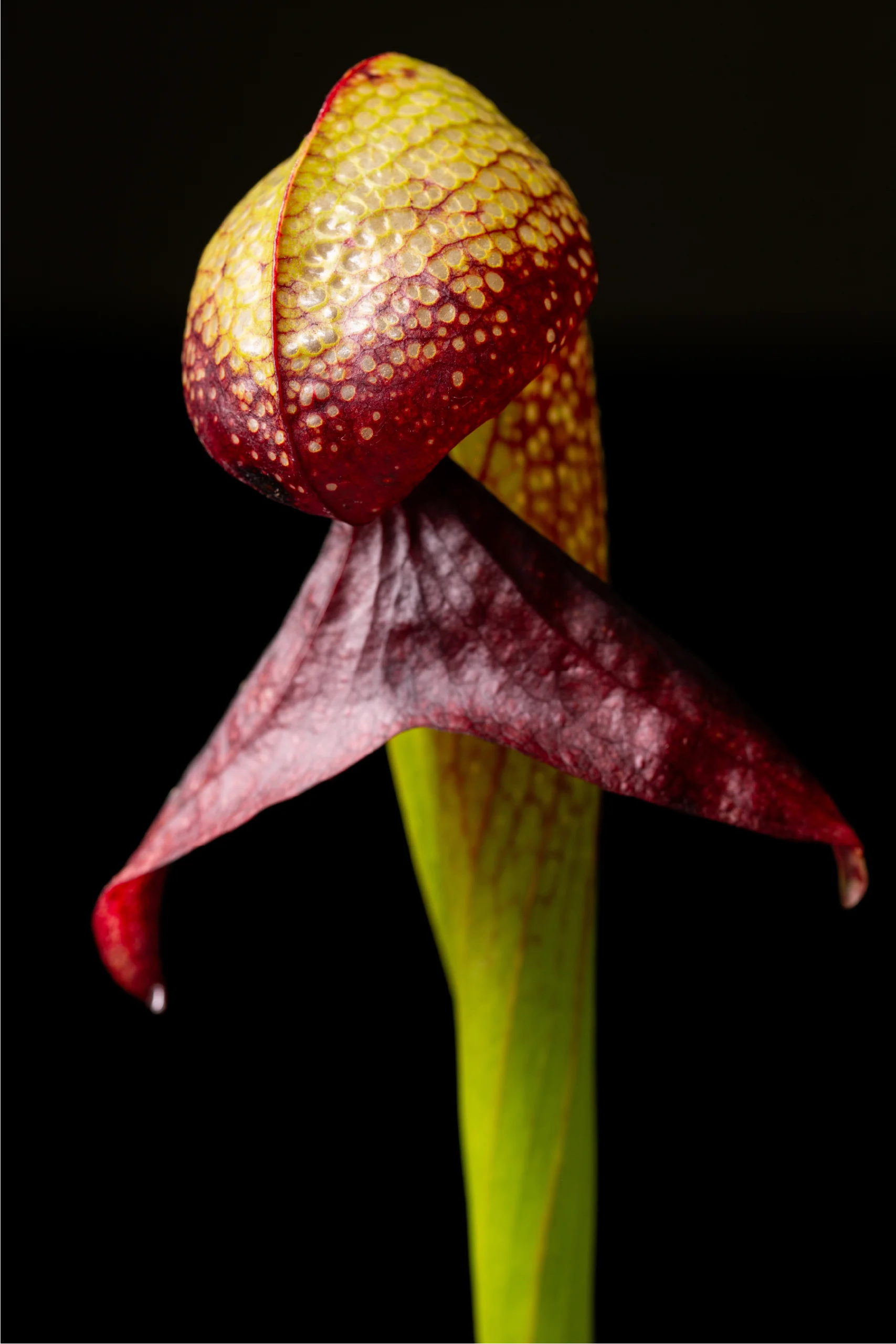
Darlingtonia californica is a beautiful cobra lily that is native to northern California. Photo credit: Francis Bauzon, SDCPS.
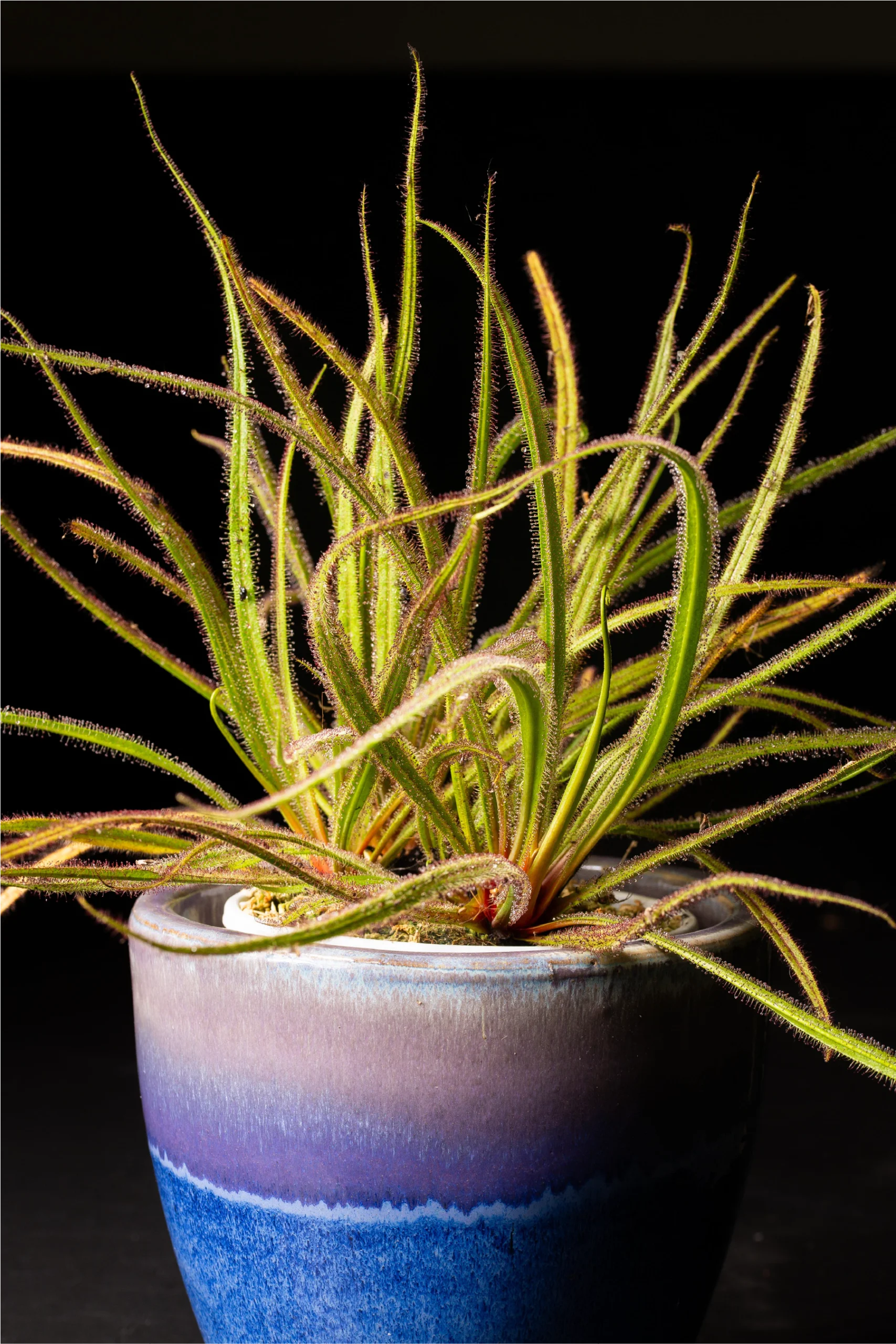
King Sundew, Drosera regia, originated in South Africa and can grow to be 18 inches tall. Photo credit: Francis Bauzon, SDCPS.