

Question: I think my Aloes are infected. Are There Pests and Diseases that Affect Them?
Answer: Yes, while succulents tend to be relatively pest and disease free, aloes and agaves can be affected. Here are three possibilities:
By Richard Reid
Succulents are a common and popular landscape addition to Southern California gardens. They can be drought tolerant, attractive, low maintenance, and texturally very interesting. However, we should know about pests and diseases that especially affect the aloe and agave family. Of the three problems that can affect Aloes in our local gardens, one has been around for a while; one is new to the San Diego garden scene; and one that, while not having been reported in San Diego in 40 years, with the ease of international travel and plant movement throughout the world, we should be on the lookout for.
The first pest is Aceria alonis, or the Aloe gall mite.
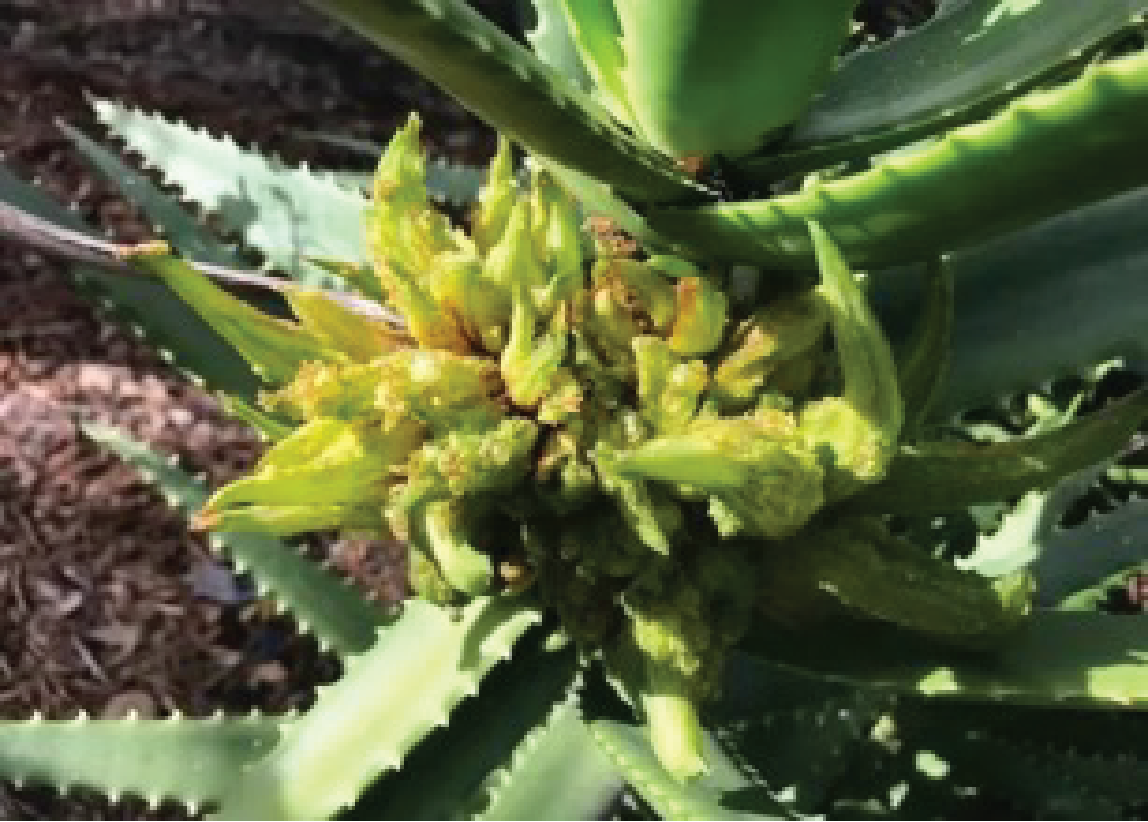
Aloe mite damage (University of California, Agriculture and Natural Resources)
These near microscopic pests feed on the sap of Aloe and a few closely related plants, causing the formation of unsightly, undifferentiated growth, or galls, on the infested plant. While the pest itself is not visible without magnification, the damage caused by these mites is unmistakable.
One initial Aloe mite treatment strategy suggestion is to isolate the plant if possible and/or to carefully remove the infected tissue. Take care when moving or cutting plants, as these mites are very small, and can be carried by the wind to other susceptible host plants in the vicinity. There are some miticides that are effective at reducing mite populations, however most will need to be applied by a licensed pesticide applicator. Villavicencio et al. showed that removal of the infected tissue followed by treatment with insecticidal soap was as effective in controlling mite infestation and damage as removal of infected tissue followed by treatment with miticide.
The second problem is the disease aloe rust, caused by the fungus Uromyces aloes.
It was last reported in San Diego County in 1978 but has been found recently in nursery grown plants in Pennsylvania. It was also found in Hawaii in a shipment of aloe plants in 2020. While not known to be present in the state of California at the present time, CDFA has assigned it a pest rating of “A” signifying the importance of being vigilant for the prevention of its establishment in the state.
Signs of Aloe rust are similar to other rust type fungi, with brown to reddish spots surrounded by chlorotic, or necrotic bands. There are no approved treatments for aloe rust, and any possible infections should be reported immediately to the California Department of Food and Agriculture and the County Agriculture department for investigation.
The third pest is the Aloe thrip, Hercinothrips dimidiatus, first identified in San Diego County in 2026.
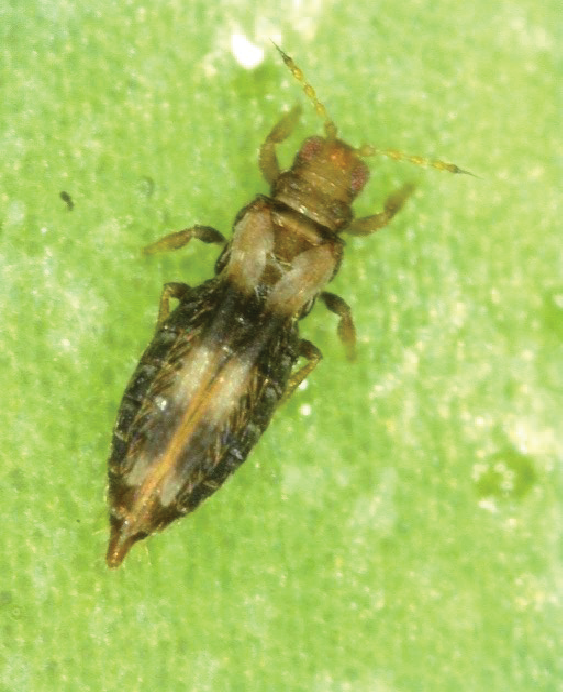
Aloe thrip (UC ANR)
It is native to South Africa, has spread to many European countries and is now becoming established in California. These thrips are small winged insects, 1 to 1.5 mm long, and feed on mature leaves of numerous aloe species. The thrip is most commonly found on Aloe arborescens or the Candelabra Aloe, although many if not most aloes can be hosts for the pest. Symptoms of thrip damage will start with small silver spots on the leaves moving towards brown necrotic spots with small black frass spots. The damage will expand to the entire leaf and in severe cases lead to death of the plant.
Unfortunately, the biology and life cycle of the pest is still poorly understood and there is no approved treatment for the thrip. General cultural controls, minimizing fertilization and removal are the best avenues for control at the present time.
While Aloes are desirable landscape plants and there are many reasons to add them to your landscape, they are not trouble free. As with any plant, careful observation and prompt response to any possible pest or disease outbreak will be your best defense against any problems that might occur.
References:
Eric Middelton. Tiny enemies of aloe and agave. University of California, Agriculture and Natural Resources, Home and Garden Pest Newsletter (2025)
Jack Kelly and Mary Olson. Problems and Pests of Agave, Aloe, Cactus and Yucca. University of Arizona Cooperative Extension (2008)
UC Davis. Aloe. University of California, Davis Botanical Conservatory Botanical Notes (2008)
Heather Martin. California Pest Rating Proposal for Uromyces aloes (Mangus) 1892, Aloe vera rust. California Department of Food & Agriculture (2024)
Bily, et al. First Report of Aloe vera Rust Caused by Uromyces aloes in an Ornamental Nursery in the United States. Plant Disease, 105(11), 3739. (2021)
Michael Forthman. Aloe Thrips (Hercinothrips dimidiatus) Pest Fact Sheet. California Department of Food and Agriculture. (2026)
Villavincencio et al. Curative and Preventive Control of Aceria aloinis in Southern California. Horticultural Entomolgy. 107(6). 2088. (2014)
Richard Reid has been a UC Master Gardener since 2025.