

Get to know 7 leggy stars of San Diego County spider season
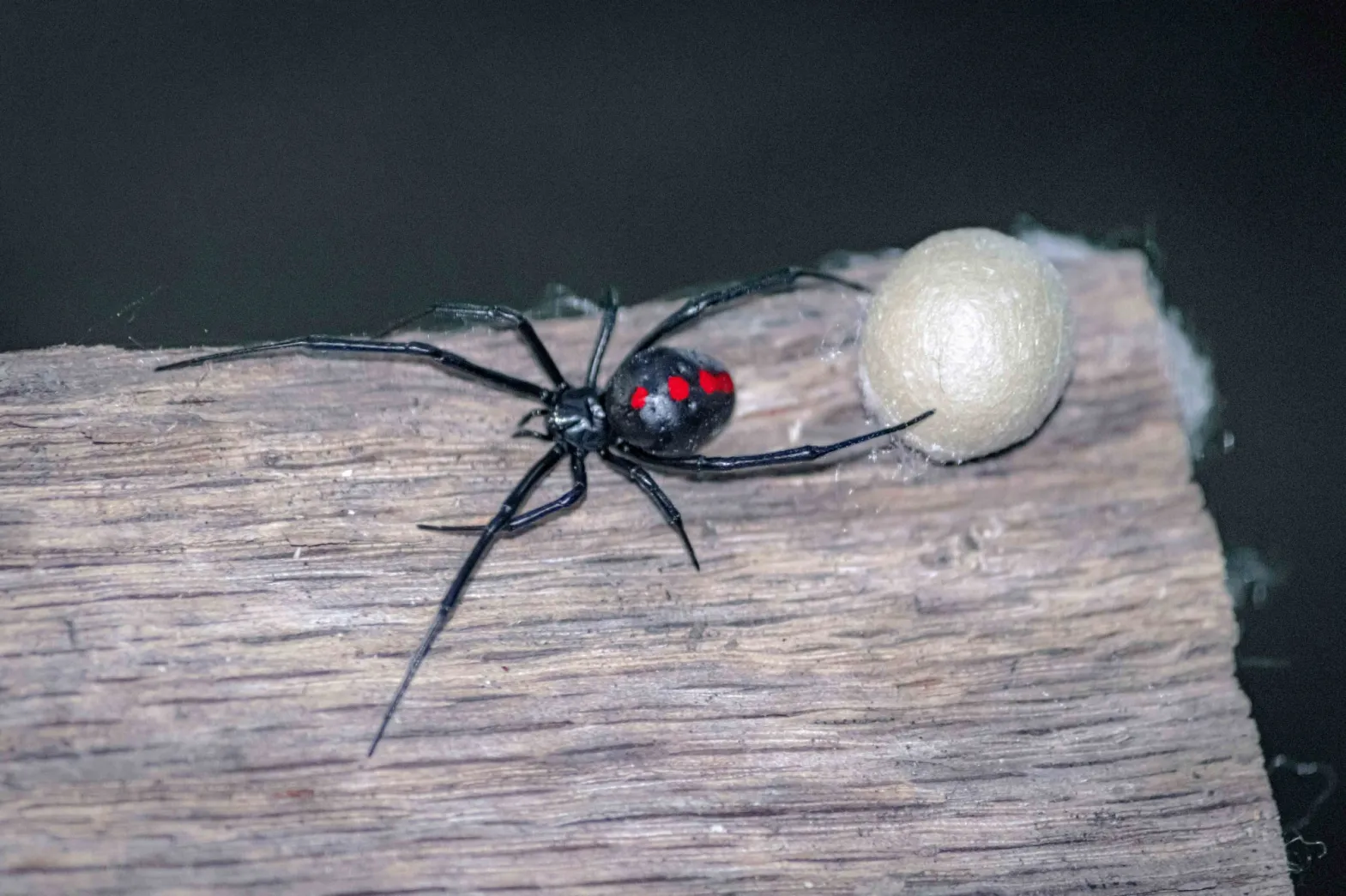
Black widow spiders (Latrodectus hesperus) rarely leave their webs and bite only if disturbed. (Tom Sid via unsplash.com)
by Michael Harrelson
(This article originally appeared in the October 10, 2026 edition of the San Diego Union-Tribune)
When we were children, we learned that spiders were itsy-bitsy and could be found in water spouts. That is as good a way as any to learn that spiders are (almost) everywhere.
Spiders can be found on every continent except Antarctica, where the absence of soil means no food resources for our eight-legged friends. Spiders have even been to space, where it was learned that they had adapted to zero gravity and spun a web. Worldwide, species estimates range from 38,000 to 53,000 different types of spiders. In San Diego County, there are approximately 430 different spider species, with seven of them considered “common”:
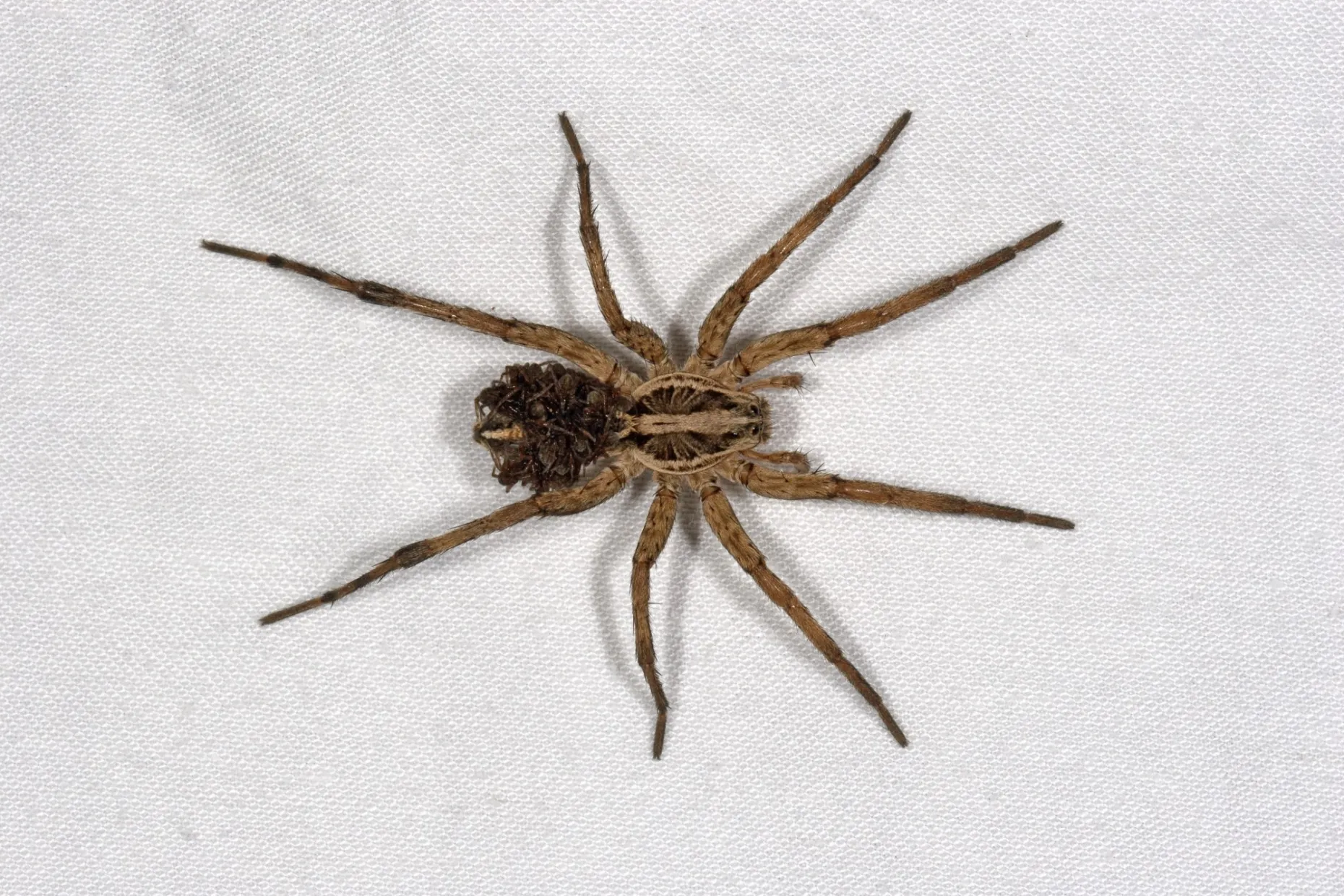
Wolf spiders (Lycosidae sp.) live in burrows and do not spin webs. (Joyce Gross)
- Cellar spiders (Pholcidae sp.) are most often referred to as daddy longlegs.
- American house spiders (Parasteatoda sp.) are responsible for cobwebs built in the corners of our rooms and spun between vertical surfaces outside.
- Black widow spiders (Latrodectus sp.) are highly venomous and prefer to stay hidden.
- Brown widow spiders (Latrodectus sp.) are well-established non-native invaders that dine on black widows.
- Orb weavers (Araneidae sp.) are large, colorful outdoor creatures that build circular webs in the garden and landscaping.
- Yellow sac spiders (Cheiracanthium sp.) are small, nocturnal hunters that do not spin webs.
- Wolf spiders (Lycosidae sp.) also do not spin webs but move quickly as they hunt at night.
Other spiders, such as tarantulas and trapdoor spiders, are present in our county but not in numbers large enough to be considered “common.” (Note: There are no brown recluse spiders in San Diego County.)
Spiders are classified as arachnids and are not insects. Insects have six legs and three body segments — head, abdomen and thorax. Spiders have eight legs and two body segments — head and thorax. All spiders are venomous to some degree, but most have mouths too small to bite a human and their milder venom is used to neutralize their tiny insect prey. Only the black widow spider is classified as dangerous to humans.
Every spider produces silk, but not every spider weaves a web. Spiders have specialized spinneret glands at the tip of their abdomen; the glands produce a liquid that firms up into a thread as it comes in contact with the air. Not all silk threads are sticky and not all are used for web making. Some webbing is used for protective shelter or lining a nest (e.g., trapdoor spiders) and some is even eaten by the spider. Silk production requires a lot of energy, and consuming the protein-rich silk helps restore a spider’s vigor.
There are four spider web designs that are typical in San Diego County: orb (outdoor traps for flying insects — and dew drops); tangle (cottony mesh cobwebs and black widow nests); sheet (wide, lacy structures that spread across lawns and low landscaping); and funnel (spiders hide at the bottom to grab prey at the top). A web’s stickiness only lasts a few days, so spiders are constantly spinning new silk to replace the old. Special oils in a spider’s body keep it from sticking to its own web.
Many people have an innate fear of spiders and exterminate every one they encounter. Avoidance is the best remedy for those who feel squeamish around spiders. However, it is universally recognized that spiders provide huge benefits to our environment. Collectively, spiders consume an estimated 400 to 800 metric tons of insects annually. They are considered as “beneficials” to those in the agriculture, gardening and environmental communities. They are major contributors to controlling the “bad bugs” in our homes and gardens.
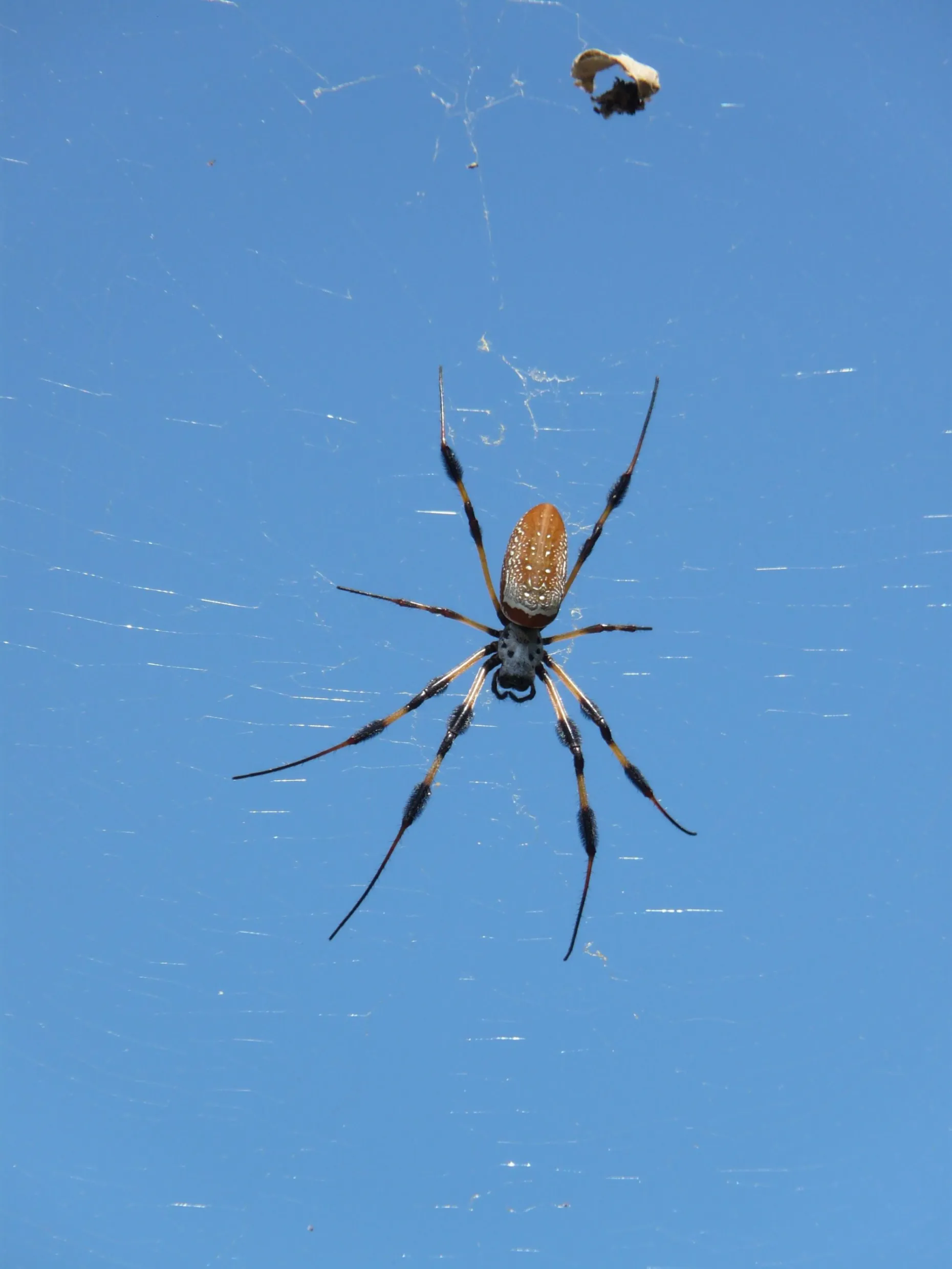
The beautiful golden orb spider (Nephila pilipes) was a guest on the International Space Station (2011). (Simon Tonge)
Spiders will not attack humans, and biting is a natural defensive action for them. If spider bites are a concern, San Diego County Vector Control recommends wearing shoes outside; removing piles of wood and leaves from areas near the house; not reaching into small, dark spaces like under furniture or into holes outside; and shaking out any clothing or towels left on the floor.
It would seem logical that National Save-A-Spider Day would be Oct. 31, considering the importance of spiders and spider webs to Halloween decor. However, March 14 was set aside by Congress as a time for us to increase our awareness of the contributions these eight-legged arachnids make in keeping our ecosystems in balance.
Celebrating spiders may sound “icky” to some, but being cognizant of the role they play in preserving our food supply and reducing the number of disease-bearing insects is something we can all be thankful for. Certainly, people will all continue to remove cobwebs from their homes and the webs that span walkways, but allowing spiders the space they need to remove flies, silverfish, grasshoppers, lacewings, crickets, cockroaches and other destructive insects from our living and gardening spaces is a way of helping ourselves.
Nature in balance is good for all of us. Removing too many of the spiders from our environment tips the scale toward the insect pests that destroy crops and spread disease. Each of us should find a way to share our space with spiders and permit them to do their jobs and protect the shared world in which we all live.
Harrelson has been a San Diego Master Gardener since 2012. He practices low-water landscaping at his home in Jamul.