
Growing opportunities flourish in the Youth Transition Campus garden
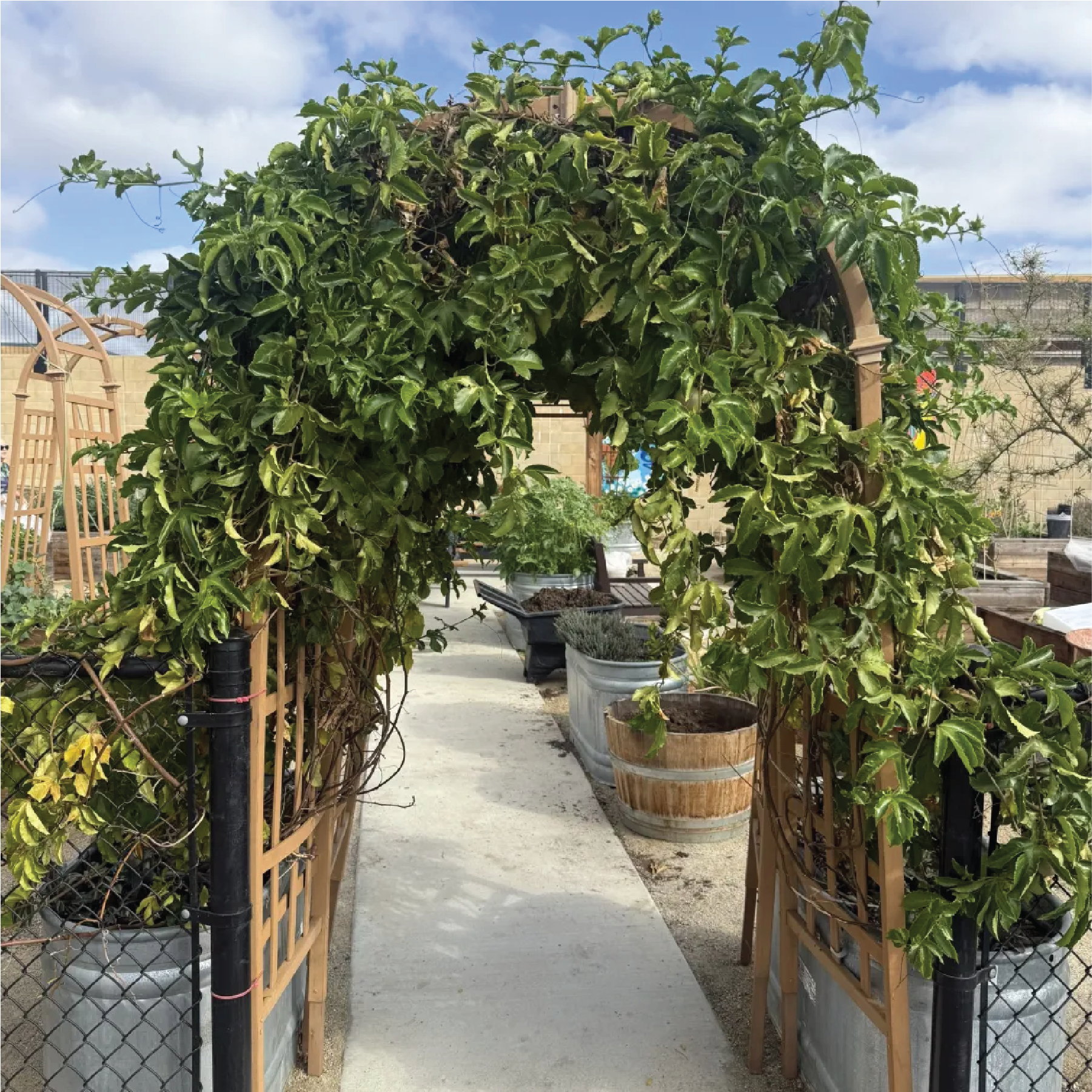
The passionfruit-covered arbor leads the way into the 8,000-square-foot Gryphon Garden at Youth Transition Campus in Kearny Mesa. (Marilyn Cornell)
By Kim Schultz
(This article originally appeared in the November 14, 2026 edition of the San Diego Union-Tribune)
Walk through the Youth Transition Campus (YTC) in Kearny Mesa, a residential campus for youth in San Diego who have been involved in the justice system, and eventually you’ll arrive at an arbor buried in passion-fruit vines. Pass through that gate, and you’ll be in the Gryphon Garden, the home of the SOAR Academy’s Career Technical Education (CTE) program on the Agriculture/Natural Resources and Plant and Soil Science Pathway, or as it’s more commonly called, Horticulture.
The Gryphon Garden is an 8,000-square-foot outdoor classroom where students learn regenerative farming techniques specific to San Diego’s urban environments.
It did not start this way. Although the new YTC campus was finished in 2022, this garden space was not completed until June 2024, and even then, it was mostly decomposed granite and bare walls. Gardens are grown, not built. In partnership with the San Diego County Office of Education, the San Diego County Probation Department and the UC Master Gardeners of San Diego County, over the last two years, the students of the YTC Horticulture program have created an urban oasis. Now, every inch of the garden is filled with growing plants in all the shades of green. Raised beds are packed with vegetables that rotate throughout the year as the seasons change, from melons and tomatoes to onions and carrots.
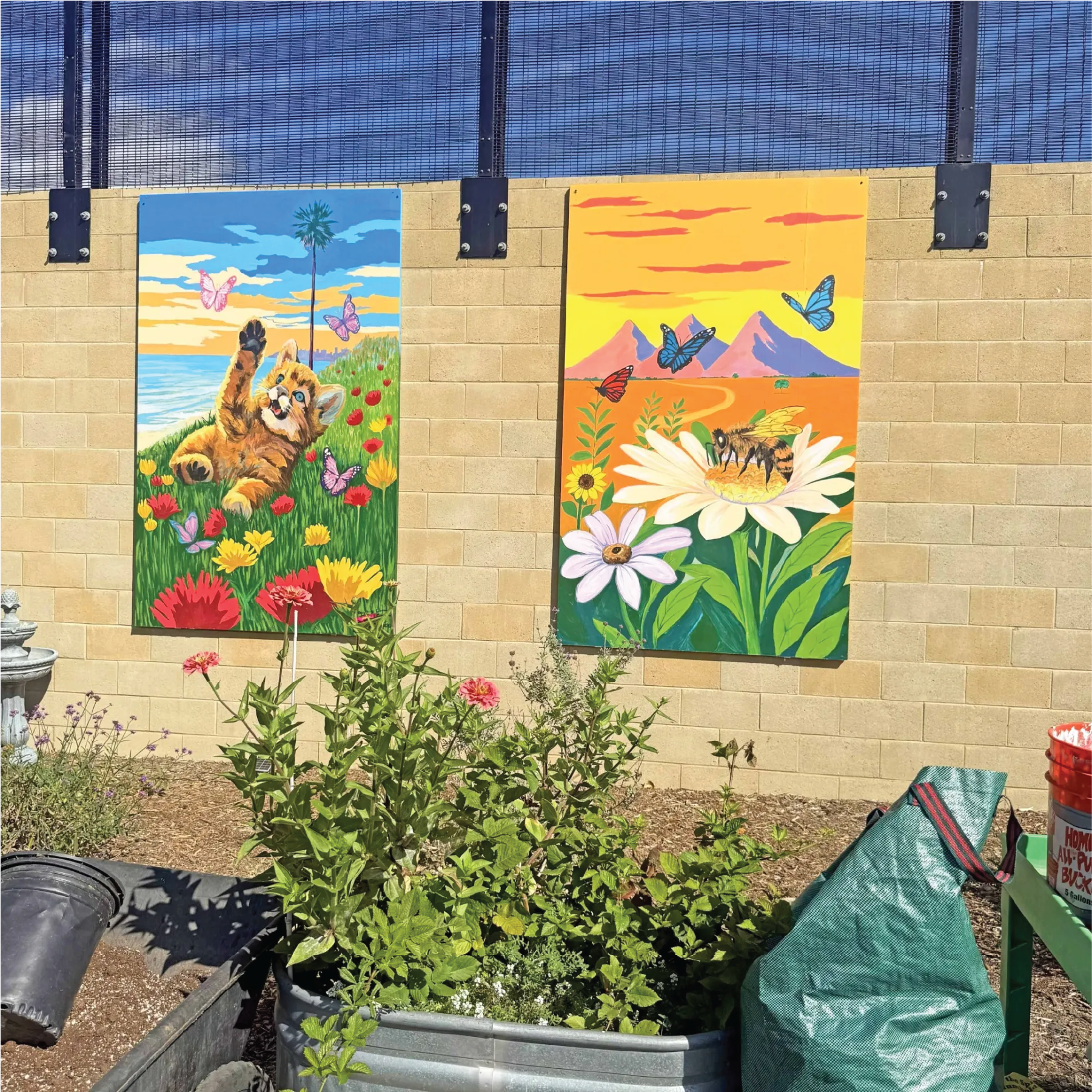
Student-created art forms a bright backdrop for the Youth Transition Campus pollinator garden. (Marilyn Cornell)
Bright art motifs painted by students decorate the walls. An orchard is carefully tended and watered for the fruit it yields. A pollinator garden featuring both perennials, like different Salvia varieties, and annuals, like zinnias and sunflowers, brings butterflies, bees, birds and insects galore to the garden.
UC Master Gardener April Lowe, a YTC Agriculture / Natural Resources educator, teaches students how to grow plants sustainably with a limited budget, from seed to table.
“We teach them how to use what is normally thrown away to make food,” said Lowe. Most of the students at YTC come from so-called food deserts, places with limited access to affordable and nutritious food. About 25% of census tracts within San Diego County are considered food deserts. Teaching students how to sustainably garden within a limited budget gives them lifelong skills to feed themselves and their families, while demonstrating what each individual can do to help soil health and restore ecosystems. “They can take this with them wherever they go,” Lowe said.
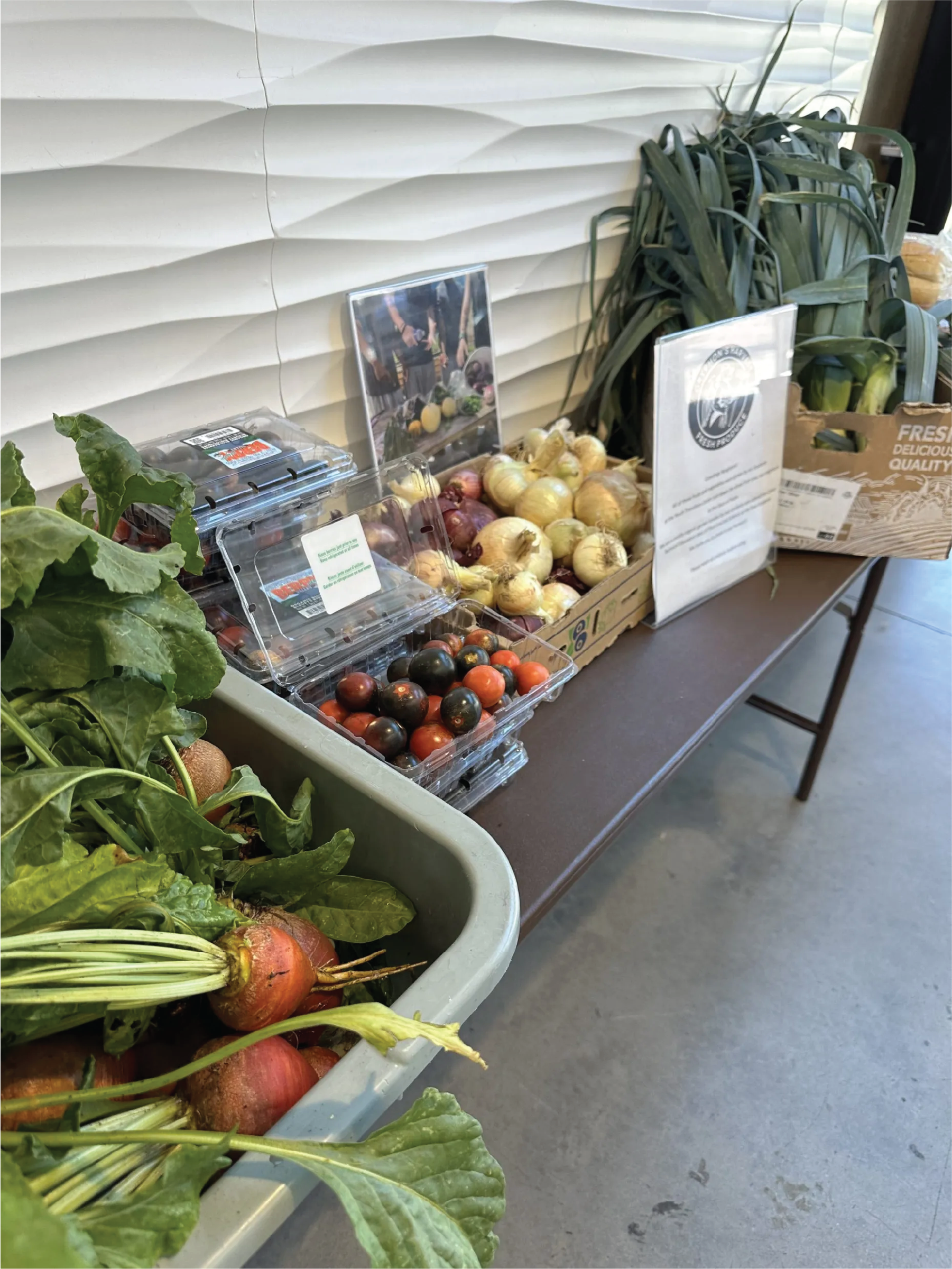
No produce grown in the Gryphon Garden goes to waste; this May 2026 donation to the Salvation Army’s Door of Hope included pounds of red and yellow onions, tomatoes, beets and greens. (April Lowe)
Students learn how to use green waste and recycling bin items to garden for free. Watering and turning the compost is one of their least-favorite tasks, but the results in the garden show them the power of rebuilding the soil. Romaine butts, sweet potato sprouts and green onion roots generate new plants. Discarded packaging materials become planters; a strip of bubble wrap becomes a seed snail for tomato starts. Students identify which seeds can be reliably harvested, stored and saved for the future, and which will not because of cross-pollination hybridization.
The skills students learn in the Gryphon Garden go beyond horticulture. Working in the garden as a team develops cooperative and communication skills. Students can express their creativity while developing entrepreneurial skills. They create succulent planters for Mother’s Day gifts, grow pumpkins for Halloween, package bundles of herbs for Thanksgiving cooking, and pot up plant seedlings for sale at UC Master Gardener events or donation to other school gardens across the county. They donate pounds of excess produce regularly to the Salvation Army Door of Hope kitchens.
Taking ownership of the garden is expected to improve the students’ attitudes and confidence.
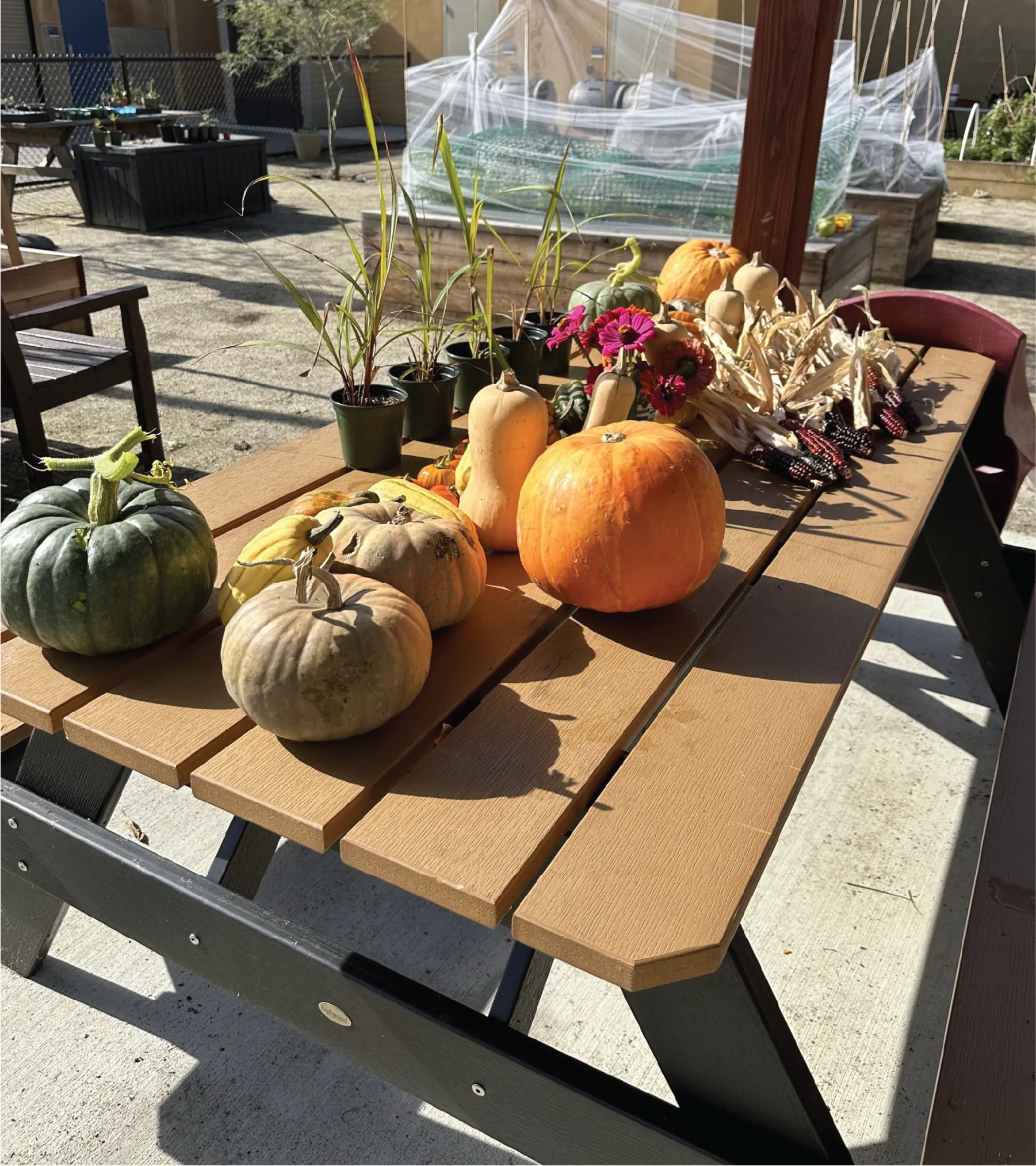
A variety of squashes, including acorn, butternut and delicata varieties, wait to be gifted to families for Thanksgiving, along with dried corn decorations and cut flowers. (April Lowe)
The snacks are also a draw for students. Fresh produce is a treat anywhere, but where the menus are institutionally directed, fresh mango or ripe melon sprinkled with Tajin spice is a bonus. Students eat everything they grow in the garden, and they request plants to be grown: the spicier the chiles, the better. In the spring, a favorite snack is an Asian cucumber salad that combines garden-grown cucumbers, cilantro, chives, onions, chiles and lime with a splash of vinegar and some sesame seeds. Great snacks are a huge incentive to wake up early, work hard and be part of the CTE Horticulture pathway.
Finally, like most gardeners, the YTC students find connections to natural wonder in their garden. When a rabbit started snacking on the garden, the students protested any talk of trapping the bunny because it was too cute. The students found a praying mantis in a veggie bed and watched, riveted, as it devoured a tomato hornworm in two bites. Discovering that some of the blueberries were ready, the students ate every ripe berry straight from the bush.
“Out here, in the garden,” Lowe said, “they’re just kids.”
Schultz has been a UC Master Gardener volunteer since 2023.