

Thyme
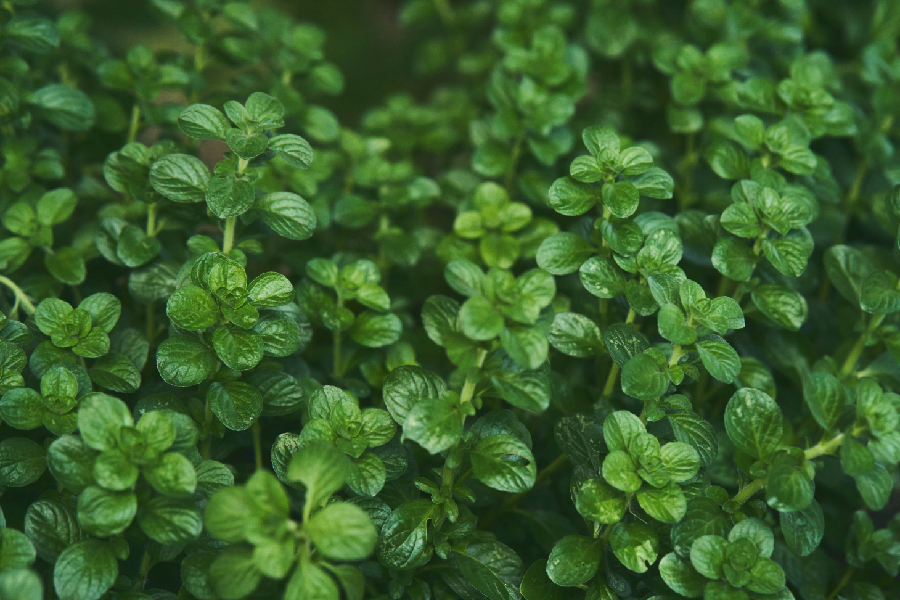
“Thyme plants can be identified by their aromatic and oval leaves. Flowers appear in the late spring and can be white, purple or pink.” Photo credit – Fernanda Arias via unsplash.com
By Michael Harrelson
Thyme (Thymus vulgaris), a culinary favorite, is found in almost everybody’s spice rack or window box herb garden. It’s prized by both chefs and home cooks for its aromatic, earthy qualities and its ability to maintain its flavor in a recipe. Thyme’s ability to enrich the flavor of food has been traced back to Ancient Egypt. It has even been detected in the mummified remains of pharaohs and queens. Since then, civilization after civilization has used the herb, not only as a recipe ingredient but for medicinal and ritual purposes. And maybe they were on to something. According to the National Institute of Health, thyme is rich in phytonutrients, minerals, vitamins, flavonoids and antioxidants.
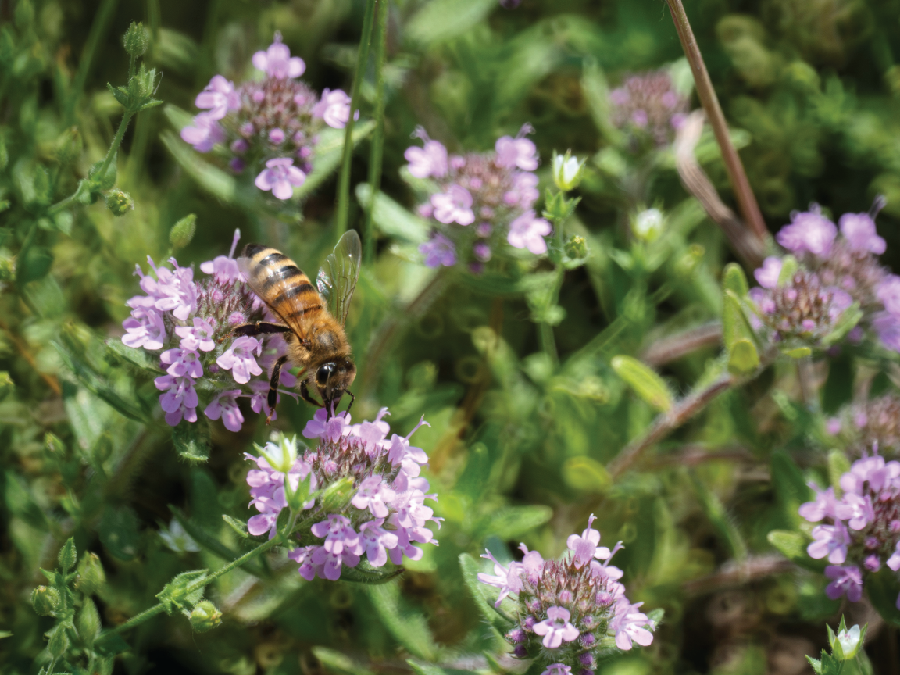
"Thyme attracts pollinators and beneficial insects such as bees.” Photo credit – Karolina Grabowska via unsplash.com
There are over 350 varieties of thyme. Every one of them, including the flowers, is edible. The more pungent varieties (i.e., English, French, German, Lemon, Orange Balsam, etc.) of this small shrub are typically used in food preparation. (Food giant, McCormick, considers its blend of dried thyme a proprietary secret.) Other varieties of thyme, less pronounced in taste, are primarily utilized for garden foliage and color. These latter varieties are commonly used as ground cover, in rock gardens, along pathway edges and between stepping stones. The creeping type of landscape thyme (blue, pink and crimson) creates a dramatic effect as it spreads and cascades over ledges. Although most types of thyme have small, needlelike leaves, some, such as Spanish and Basil varieties, have broad leaves and can add an unexpected texture to the landscape. Pollinators love thyme and its presence in the garden provides a valuable benefit to all the other plants around it.

"There are 350 varieties of thyme, all are edible.” Photo credit – Anja Junghans via unsplash.com
Because thyme’s origins are Mediterranean, it is a perfect fit for San Diego’s climate and slightly alkaline soil conditions. This easy-to-grow evergreen perennial wants full sun, well-drained soil with a root system that stays on the drier side. It tolerates long periods without water but benefits from an occasional deep soaking during hot, rainless periods. Thyme is susceptible to root rot so don’t over water it. Spider mites and aphids can be a problem in the summer. Wide spacing of the plant in the garden provides the sunlight and enhanced air flow that will discourage spider mite infestation. Controlling aphids means controlling ants in the garden. Deer and native rabbits ignore thyme as a food source.Generally, thyme is disease and pest resistant. Plant thyme in the late spring or early fall; then expect it to bloom in early summer. Upright varieties will grow to about 15” high and become woody over time so trim it back, divide it or replace it if it becomes unsightly.
Go wild with thyme. Combine it with commonly used herbs, such as rosemary, oregano, tarragon and sage, in a collection of colorful pots placed near the kitchen to have easy access to fresh-from-the-garden flavor; tuck unusual varieties in the open spaces of a rock wall; place creeping thyme in a large ceramic planter for an eye-catching addition to the backyard or sip a warm cup of thyme leaf tea and contemplate, “What next?” for this fun and versatile plant in your garden.
Michael Harrelson has been a San Diego Master Gardener since 2012. He practices low-water landscaping at his home in Jamul.