

Winter Citrus Care
by Kim Schultz
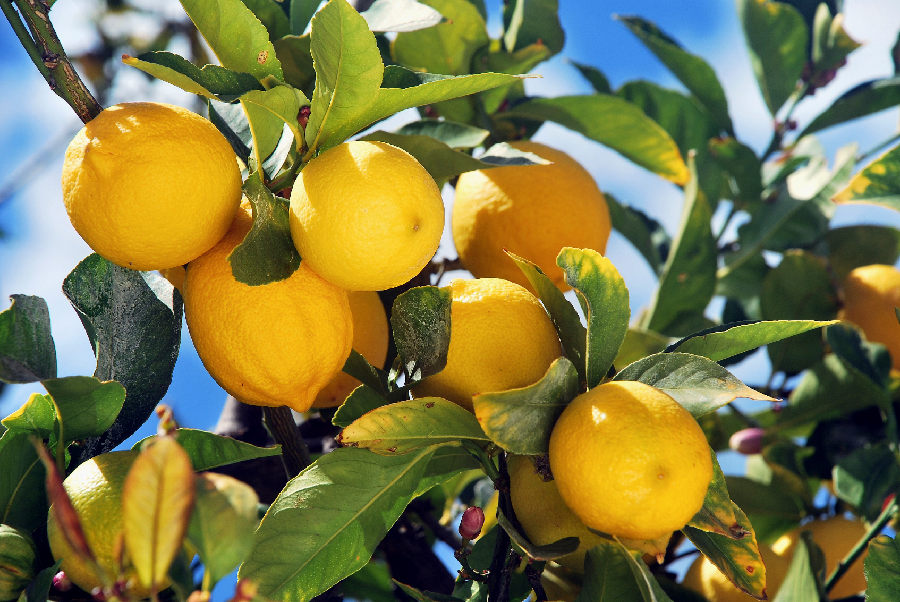
Winter brings the longest nights and shortest days, but it also brings the sunniness of citrus fruit season. While California enjoys citrus year round, winter is a glorious time for many citrus trees: Meyer lemons and clementines, grapefruits and blood oranges. The easy availability of dwarf, semi-dwarf, and standard sized trees at nurseries and home improvement stores means there is a citrus tree to fit every home, whether that’s in ground or in a pot. There’s something magical about being able to pick a fresh lemon or lime off the tree for tonight’s dinner.
Basic Citrus Care Tips
Watering: In winter, make sure the shallow roots of citrus are consistently getting water; inconsistent watering will lead to smaller fruit or fruit splitting. Beware of overwatering trees after rain; this can lead to root and crown rots. Adjust irrigation systems to accommodate winter rains. Citrus trees have shallow root systems, so a good layer of mulch that does not touch the trunk is a great help in retaining consistent moisture in the soil.
Feeding: Mature citrus requires regular nitrogen feedings, but it is also more difficult for plants to take up nitrogen from cold, wet winter soils. Follow the directions on the citrus fertilizer for application and frequency.
Harvesting fruit: Harvest when the fruit reaches its full color. Know what variety a tree is and what the color of the fruit should be. For example, Bearss limes will be yellow when ripe, so picking green ones only yields immature fruit. Citrus does not ripen further once taken from the tree, so it should be fully ripe when picked. Once picked, it will keep for 4-6 weeks in the fridge.
Common Winter Maladies
Our Master Gardener Hotline gets many questions about citrus issues in winter; here are the most commonly asked:
Yellow leaves: nature, overwatering, or nutritional deficiency?
Yellowing of leaves and leaf drop in winter is common due to cooler soils and the excessive water of winter rains. The plant may be letting go of older leaf growth to make way for new leaves in spring. It can also be caused by nitrogen deficiency, caused by the cooler soil temperatures preventing the plant from up-taking the nitrogen in the soil, so if the plant is regularly fertilized, adding more fertilizer will not help.
Keep an eye out for soggy soil and for new growth in spring. If the plant is overwatered, re-evaluate its irrigation and possibly its place in the yard. If the new leaf growth in spring comes in green and lush, the soil has warmed enough for roots to access the nitrogen.
If new growth comes in yellow or yellow-patterned in spring, there are some typical culprits:
- Nitrogen deficiency - uniformly yellow or pale green leaves, remedied by nitrogen application
- Iron deficiency - yellow leaves with distinct green veins, remedied by supplemental chelated iron and improving soil aeration
- Zinc deficiency - small yellow leaves with distinct green veins, often that form in tufts or rosettes, remedied with chelated zinc and improving soil aeration
- Manganese deficiency - wide yellow patches between green veins, remedied by manganese chelate and improving soil aeration
Black sticky stuff on leaves: black sooty mold
Black sooty mold is very common on citrus in San Diego County. It is a fungus that grows on plants that do not have sufficient airflow and additionally may have some leaf-sucking pests, such as aphids, mealybugs, or whitefly. These leaf-sucking pests often excrete a substance called honeydew, which ants love. The ants protect the leaf-suckers from ladybugs and other natural predators so the ants can farm more honeydew. The honeydew attracts the black sooty mold fungus.
It’s a symbiotic relationship, where the leaf-suckers create honeydew, the honeydew feeds the ants, and the ants protect the leaf-suckers. To get rid of the black sooty mold, treat all three.
- First, get rid of the ants. Place boric acid ant baits but also use a sticky barrier deterrent such as Tanglefoot around the trunk of the tree to ensure the ants can no longer climb the tree itself. Make sure the tree branches are not touching a wall, a fence, or another tree where the ants could climb back to their precious honeydew farm.
- Next, manage and reduce the population of leaf suckers. Treatment is going to depend on which leaf-sucker it is, but some of the most prevalent in San Diego County are aphids, mealybugs, and whiteflies. Check the links to the pest notes for best abatement options; our Master Gardener Hotline volunteers are always happy to help identify a pest from a photo.
- Once the ants have been shunted and the leaf-suckers banished, wash the black sooty mold itself from the leaves with a horticultural soap solution, either by spraying the leaves or wiping each leaf, depending on the tenacity of the infestation. It doesn’t harm the fruit; simply wash the black sooty mold off the fruit before eating.
Once that’s all done, look at the shape of the tree to see if the air circulation can be improved to prevent future sooty mold infestations. Follow guidelines from the Pruning Citrus guide or this page or consult a licensed arborist.
Weird tunnels on leaves: citrus leafminer
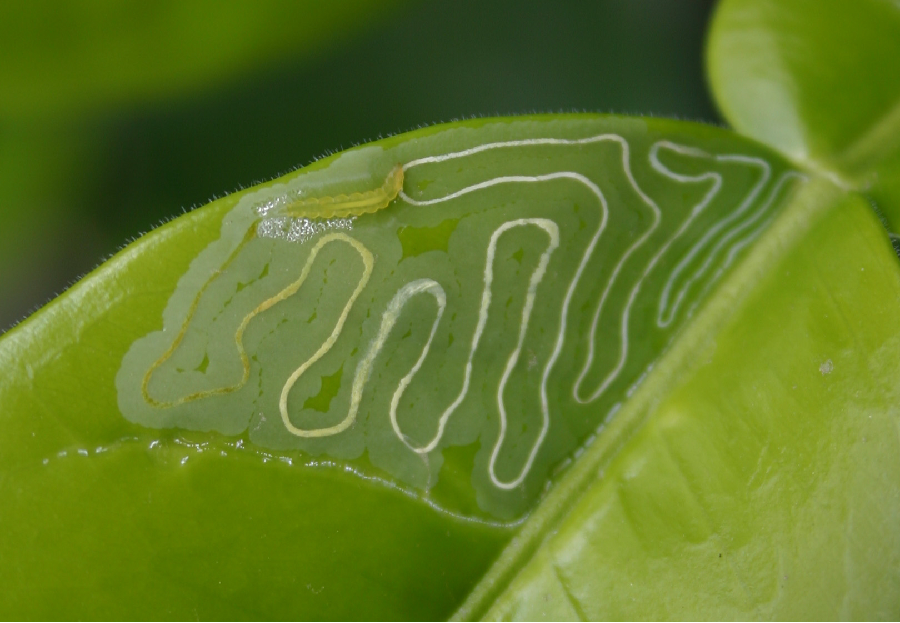 In the category of “more annoying than disastrous” citrus pests is the citrus leafminer. It’s a tiny moth, but most people call our Master Gardener Hotline worried about the distinctive damage it does to the leaves of citrus trees in the larval stage: a shiny silvery or white wiggly line on the surface of newer, younger leaves, looping back and forth under the surface. In the worst cases, new leaves may appear curled with brown edges. That’s the citrus leafminer larvae feeding by creating shallow tunnels in citrus leaves.
The good news is that while the damage looks terrible, it does not affect the overall health of the tree. In our environment, there are many natural enemies of the citrus leafminer that will take care of them once they're mature moths. Even in trees less than four years old, the citrus leafminer damage is not catastrophic. The leaves still provide food for the tree, so do not cut affected leaves off. Leafminers populations go down in summer when temperatures rise. There are pheromone traps available, but keep in mind that they are for informational purposes, not a deterrent, and they only trap the males.
Small fruits
Small fruits are a sign that the tree is struggling with health or environmental issues. One common cause is a nutrient deficiency. Citrus trees need balanced nutrition, including nitrogen, phosphorus, potassium, and micronutrients like magnesium and zinc. Apply a citrus fertilizer according to the instructions on the package; more information on fertilizing citrus is available here.
Water stress is another factor. Inconsistent or insufficient watering, especially during fruit development, can stunt the size of fruit. Double check the efficacy of the irrigation system and consider adding mulch to retain moisture in the soil.
Pruning also plays a role. Too much foliage or overcrowded branches might lead to smaller fruit. A light pruning to remove dead or crowded branches can improve air circulation and fruit quality; see more information here.
Sometimes, the tree tries to produce too many fruits, which can cause each one to stay small. Thinning out some fruit early in the season may allow the remaining fruit to grow larger.
Respect Quarantine Zones: Asian Citrus Psyllid and HLB
One of the worst pests that’s entered California is the Asian Citrus Psyllid. Populations are low during the winter, but all citrus growers in Southern California should be aware of the problems it causes. This tiny brown insect (just 3-4 millimeters long) entered California in 2008, and growers and authorities have been working hard to keep it from affecting California’s citrus groves ever since. The Asian Citrus Psyllid carries Huanglongbing (HLB) disease, also known as citrus greening disease, spreading from tree to tree as it feeds. This disease turns citrus fruits green and bitter, and it has already devastated Florida’s orange groves. Currently, there is no treatment for HLB.
The California Department of Food and Agriculture has been tracking the Asian citrus psyllid (ACP) and actively maintaining quarantine zones to prevent HLB from spreading in California. They may hang traps or tag and test citrus trees for the virus; do not disturb or remove these traps or markers. Always remove all leaves and stems and wash citrus fruit well before sharing. Do not move citrus plants or plant material out of a quarantine zone. Buy new citrus plants locally. Discover where quarantines are in effect at the CDFA website or the California Citrus Threat website.
If Asian citrus psyllid is spotted or even suspected, contact the California Department of Food and Agriculture at 1-800-491-1899. For more information on HLB, refer to this article.
Conclusion
Growing citrus is mostly a joy in San Diego County; the mild Mediterranean climate allows for citrus trees with their beautiful evergreen glossy leaves to really shine. The sweet white fragrant flowers give way to vibrant fruits that taste as good as they look. In winter, making sure trees have sufficient nitrogen and other micronutrients to thrive, while not getting overwatered, will ensure a bountiful citrus harvest.
Schultz has been a Master Gardener since 2023.